
Archive
The information on forthcoming and past events is available only on the German language version of the website. There you can find an overview of dates, places, and topics.
Termine
-

The Old Jewish Cemetery "Heiliger Sand" has existed since the 11th century. It is Europe’s oldest in situ Jewish cemetery and is located outside the medieval city limits. Its 2,500 gravestones bear witness to centuries of history, making the cemetery a unique cultural monument of international significance. Many prominent scholars and rabbis are buried here, which is why the site remains an important destination for Jewish believers from all over the world.
Since July 2021, the cemetery has been part of the UNESCO World Heritage Site ShUM-Sites Speyer, Worms, and Mainz, alongside the synagogue district, including the synagogue, the Rashi Yeshiva, the mikveh, and the Rashi-House.
Starting March 20, a one-hour guided tour of “Heiliger Sand” will take place every Friday at 3 p.m. During the tour, guides will explain the cemetery's unique features, history, and distinctive atmosphere.
In November, the tours will begin at 2 p.m., except for Friday, May 22, and September 11 and 25.
The Tourist Information office offers the tour for individual guests and small groups of up to six people. Male visitors must wear a head covering.
Tickets cost €10.00 and are available online at www.ticket-regional.de/tiworms until the start of the tour. They are also available in advance at the Tourist Information office, the Shop am Dom, and all other Ticket Regional advance sales locations. Children 14 and under are free.
-
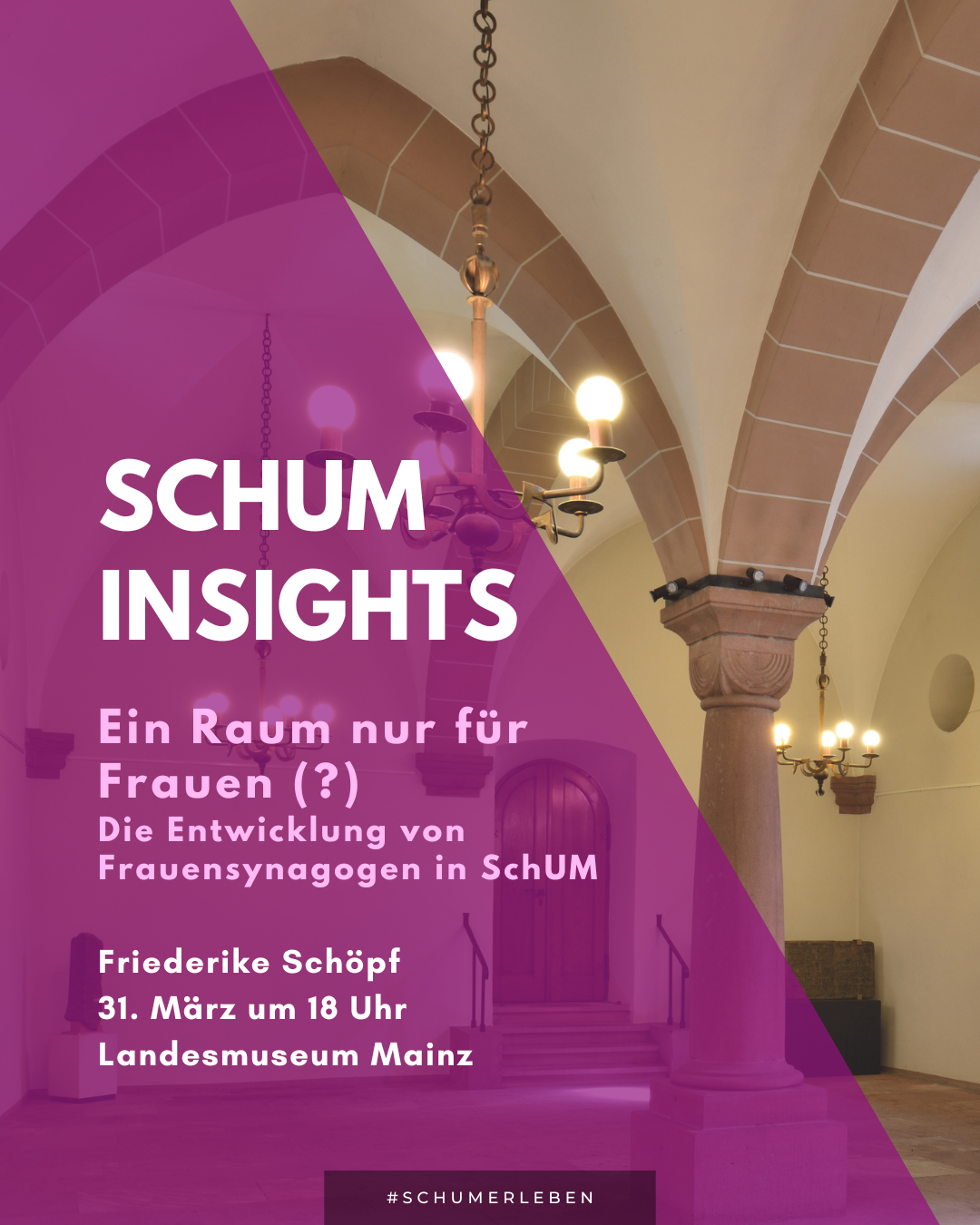
Many contemporary Jewish traditions appear to be time-honored and deeply rooted in the religion. For example, the separation of men and women in the synagogue is often regarded as a self-evident practice. However, a closer look reveals that many of these customs have a long history of development shaped by cultural and historical influences.
Dr. Friederike Schöpf, a renowned expert on ancient Judaism, medieval synagogues, and the development of women's sections in synagogues at the Institute for Jewish Studies at the University of Münster, will trace the origins of women's synagogues in her hybrid lecture. She will also open up new perspectives on religious life in the ShUM communities through these unique spaces.
Tuesday, March 31, 2026, at 6:00 p.m.
Landesmuseum Mainz, Große Bleiche 49-51, 55116 Mainz
Please register by email by March 30 at 12:00 p.m. at anmeldung_at_gdke.rlp.de. The access link will be sent to participants by email after the registration deadline. Participation is free of charge.
-

Here are the Jewish holidays for 2026:
May 21–23: Shavuot
September 11–13: Rosh Hashanah
September 20–21: Yom Kippur
September 25–October 2: Sukkot
October 2–4: Shemini Atzeret and Simchat Torah
December 4–12: Hanukkah
Jewish holidays begin the evening before and end shortly after nightfall the next day. On biblical holidays and Shabbat, work is prohibited, meaning no work may be performed and no fire may be lit. One may not cook, make phone calls, watch television, etc.
The Old Jewish Cemetery "Heiliger Sand" and the Old Jewish Cemetery "am Judensand" are closed on these holidays.
-
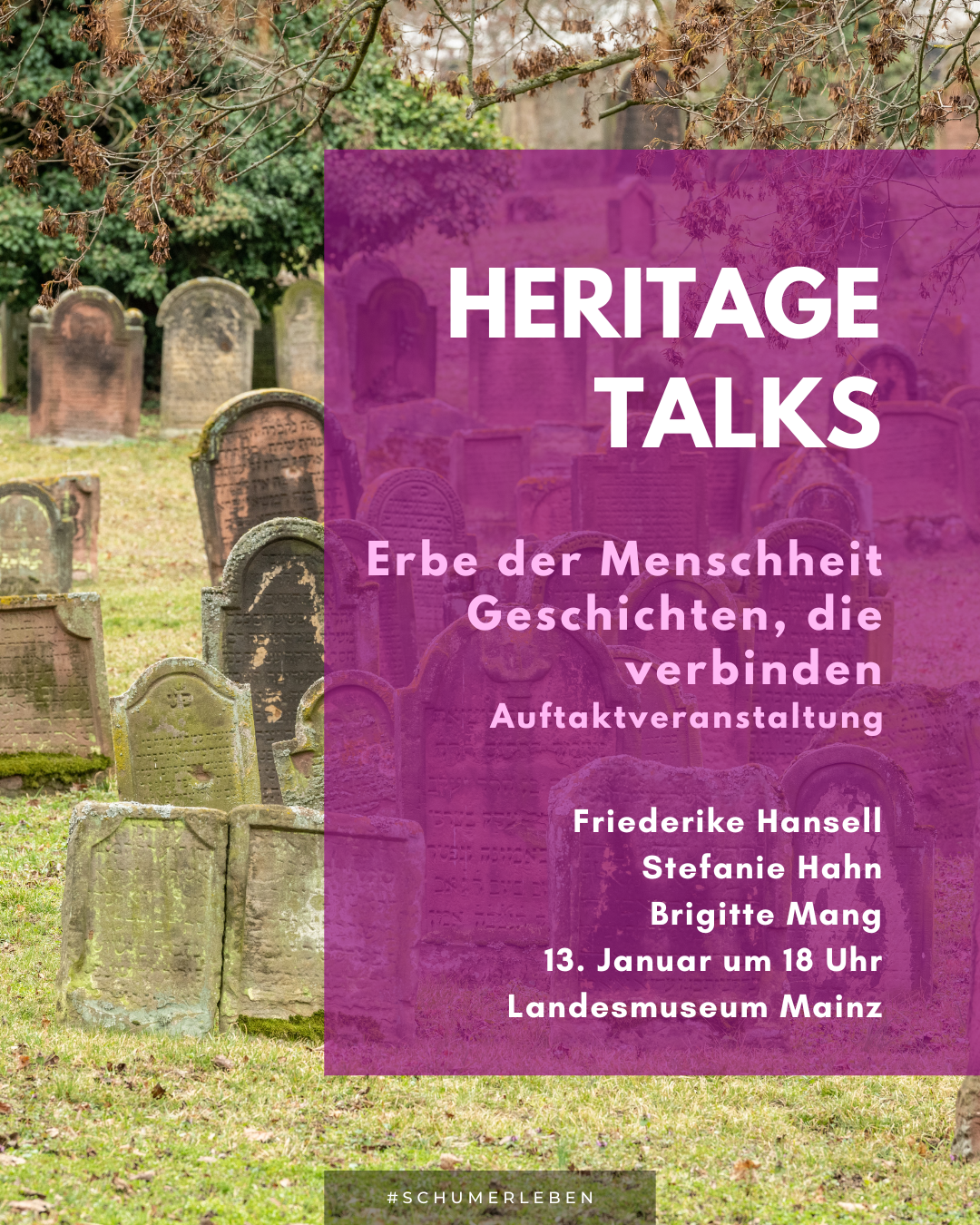
What do the pyramids of Giza, Cologne Cathedral, the Old City of Jerusalem, the Wadden Sea, Hadrian's Wall, and Trier Cathedral have in common? The answer is the concept of UNESCO World Heritage, which aims to protect, preserve, communicate, and safeguard exceptional sites and landscapes for future generations.
Our new lecture series, "Heritage Talks," invites you to carry this idea forward and discover the stories behind World Heritage Sites alongside experts. In collaboration with the Directorate-General for Cultural Heritage RLP, specifically the Secretariat for World Heritage in Rhineland-Palatinate, and the State Museum Mainz, we aim to foster connections among people, transcending time, cultures, and borders.
At our kickoff event on January 13, 2026, Friederike Hansell, Head of the World Heritage Coordination Office at the Federal Foreign Office, will give a keynote speech about UNESCO's criteria and its work. This will be followed by a discussion with Dr. Stefanie Hahn, Head of the "Cultural Heritage, World Cultural Heritage" Division at the Ministry of the Interior and Sport of Rhineland-Palatinate, and Prof. Brigitte Mang, a member of the Monitoring Group of the German National Committee of ICOMOS. They will discuss the World Heritage Sites in Rhineland-Palatinate, their particular challenges, and the rich cultural heritage in Germany and beyond. Birgit Kita, the managing director of ShUM-Cities e.V. and site manager of the ShUM-Sites, will moderate the evening.
We cordially invite you to attend this hybrid lecture. As space is limited for in-person attendance, please register by January 12 at 12 p.m. by email to anmeldung_at_gdke.rlp.de. The access link for online participation will be sent via email after the registration deadline. Participation is free of charge.
-

Jewish culture and music are integral to European and German culture. For this reason, internationally acclaimed concert guitarist Lucian Plessner developed an exciting musical program for the 2021 “1700 Years of Jewish Life in Germany” anniversary year, which has been touring successfully ever since. The program, Jewish Music — What Is It?" Sephardic and Ashkenazi Musical Creations from Al-Andalus to Modern Europe and America, is a musical journey from the early Middle Ages to the present day. It combines impressive compositions with reflections on Jewish artists' willingness and ability to integrate into different countries and eras. Jewish composers from the United States and Latin America have also contributed their works to this unique program.
Starting in November 2025, Plessner will present the program for the first time in Germany, in the ShUM-Cities of Speyer, Worms, and Mainz.
Saturday, November 29, 2025, at 6 p.m. Worms
SchUM-Lab, Neumarkt 10, 67547 Worms
Register at laura.karnasch_at_schumstaedte.de.Sunday, November 30, 2025, 5 p.m. Speyer
Beith Shalom Synagogue, Am Weidenberg 3, 67346 Speyer
Registration: laura.karnasch_at_schumstaedte.de.Thursday, January 15, 2026, at 6 p.m. Mainz
Landesmuseum Mainz, Große Bleiche 49-51, 55116 Mainz
Registration: anmeldung_at_gdke.rlp.de.The concert series is sponsored by the Federal Ministry of the Interior and Homeland Security, as well as the Federal Government Commissioner for Jewish Life and the Fight Against Anti-Semitism, Dr. Felix Klein. Thanks to this generous sponsorship, participation is free of charge.
-
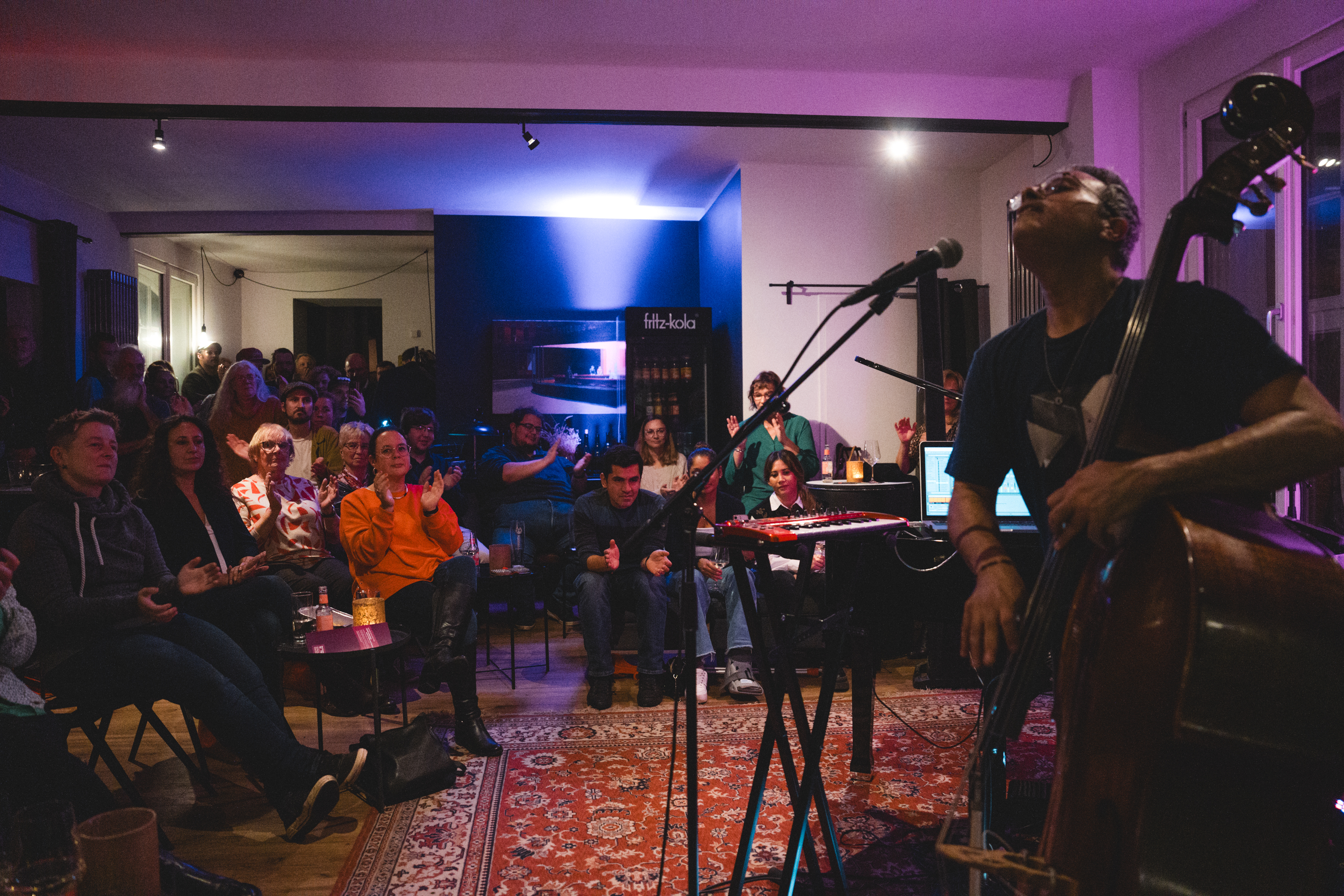
From September 7 to December 6, the ShUM-Cities Speyer, Worms, and Mainz will host the ShUM Culture Days 2025 to showcase the rich history, lively traditions, and creative expressions of Jewish life in the Upper Rhine region in a special way. The diverse program includes concerts ranging from jazz to pop, as well as readings, theater tours, inspiring lectures, discussion panels, and exhibitions. Whether you are a culture fan, history lover, or curious explorer, the ShUM Culture Days appeal to a wide audience and offer a meeting place where interreligious dialogue, mutual understanding, and shared celebration take center stage.
Speyer: September 27 to November 23
Worms: October 27 to November 16
Mainz: September 7 to December 6For more information and program flyers, visit www.schumstaedte.de/schum/schum-kulturtage/ or follow @welterbe.schum on social media.
-

On 7 September, around 30 European countries will celebrate the European Day of Jewish Culture (EDJC) together with the European Association for the Preservation and Promotion of Jewish Culture and Heritage (AEPJ). The ShUM-Cities Speyer, Worms and Mainz, as well as the Jewish Medieval Heritage in Erfurt — added to the UNESCO World Heritage List in 2023 — will offer a diverse programme in September, providing exciting insights into their rich cultural heritage and the unique characteristics of these sites, as well as community life then and now.
In addition to exciting guided tours of the ShUM Community Centre in Speyer's 'Judenhof', the UNESCO World Heritage Sites in Worms and the old Jewish cemetery 'Judensand' in Mainz, entry to the Museum SchPIRA and the Jewish Museum Raschi-Haus in Worms will be free on 7 September.
In cooperation with the Worms City Library, the ShUM-Cities Speyer, Worms, Mainz association will set up a media table starting September 5th. This will be available to visitors throughout September, inviting them to browse, read, and borrow. The table offers a wide range of literature, including works on the UNESCO World Heritage Sites Speyer, Worms and Mainz, as well as books on Jewish life and culture, anti-Semitism, biographies, children's books and novels.
On 7 September, the state capital of Mainz will celebrate two special events: The European Days of Jewish Culture and the opening of this year's Mainz ShUM Culture Days, which will feature an open day at the New Synagogue in Mainz. Visitors can experience Jewish history and culture up close together with the Jewish Community of Mainz-Rheinhessen. Guided tours of the New Synagogue and tastings of Jewish specialities will be rounded off by a special opening concert.
On 10 September, visitors to Erfurt will have the unique opportunity to join Dr Karin Sczech, the city's Commissioner for Jewish Medieval Heritage, and Gudrun Noll on a tour tracing the history of Erfurt's second Jewish community. The largely intact medieval old town of Erfurt contains unique architectural evidence of the important Jewish community from the period between the end of the 11th and the middle of the 14th century.
-

In order to provide an improved user experience, updated content and new features, our website is currently being redesigned.
As a result, some areas and functions may be temporarily unavailable or inaccessible. But don’t worry – we'll be back soon!
You can still find valuable informations about the ShUM-Sites in Speyer, Worms and Mainz, as well as helpful details for planning your visit, on our website.
Stay tuned – we'll keep you updated, and we look forward to presenting our new website to you soon.
Thank you for your understanding!
-
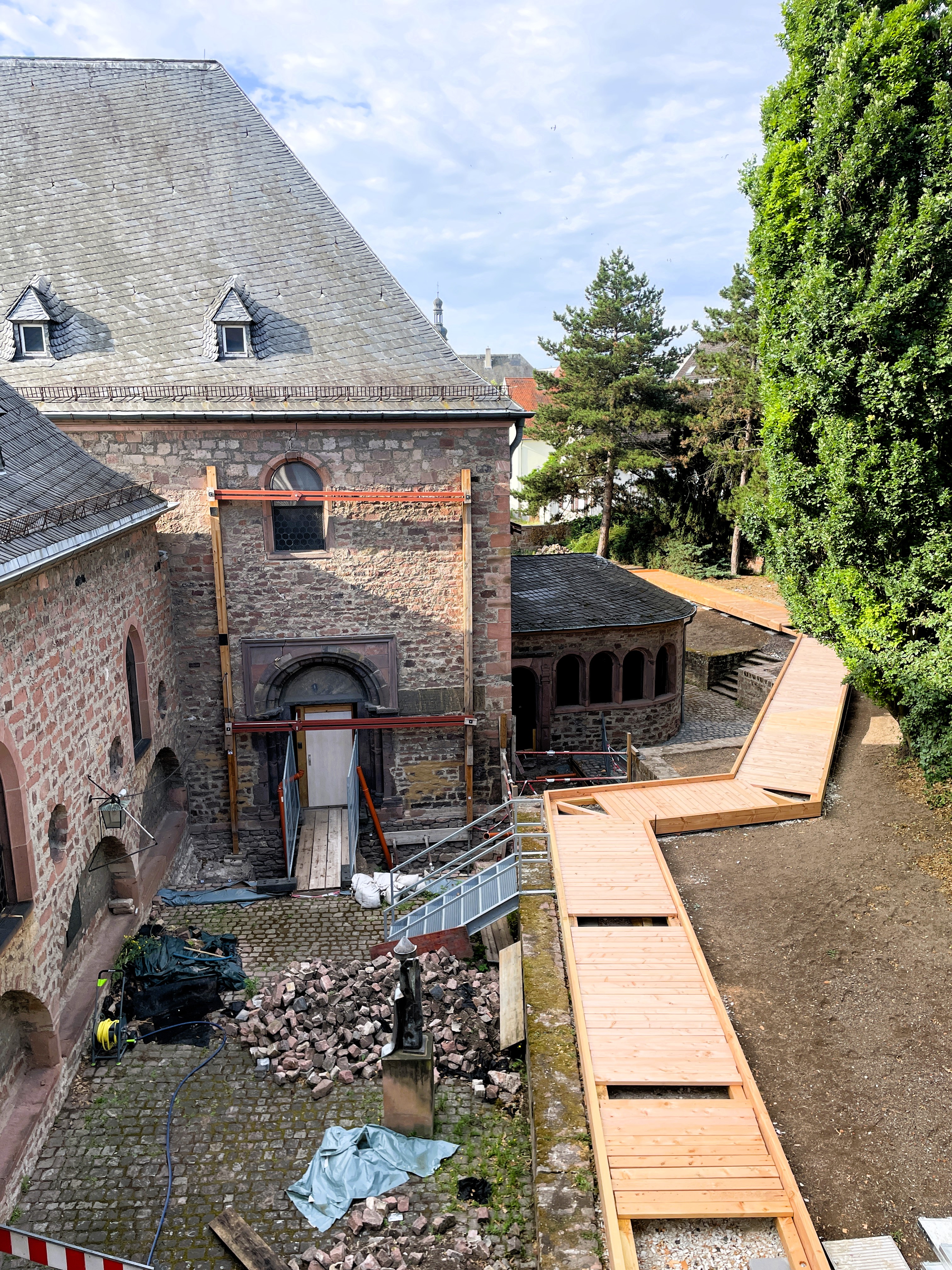
For three years, the synagogue and mikvah were hidden behind construction fences and covered by protective roofs. Now, the construction site has disappeared!
The synagogue district will soon be revealed in all its new splendour — the synagogue garden is currently undergoing extensive renovation and redesign. A wooden walkway will guide visitors through the garden, making the exterior of the women's school, synagogue, teaching house, and mikvah visually accessible once more.
Thanks to its barrier-free design, the synagogue garden will be more inclusive and accessible than ever before. Additionally, interactive educational units will soon offer insights into the history and significance of the Worms synagogue district, which is one of the four components of the UNESCO World Heritage ShUM-Sites of Speyer, Worms and Mainz."We are delighted to be reopening the synagogue garden soon, so that visitors from Worms, the region and around the world can experience Jewish history and culture in the heart of our city" (Timo Horst, Head of Urban Development).
The project is being developed in close cooperation with:
◾ The Worms Lower Monument Protection Authority
◾ShUM-Cities association
◾The Rhineland-Palatinate State Monument Conservation Authority
◾The Rhineland-Palatinate Ministry of the Interior
◾The ICOMOS Monitoring Group Germany
◾ The municipal cultural coordination (idea and basic concept for the footbridge). -
-

On 6 September, together with the City of Mainz and numerous guests from the worlds of politics, civil society and culture, we celebrated the opening of the first ShUM Visitor Centre for our serial World Heritage Site. The exhibition at the "Sali-Levi-Haus" allows visitors to learn about the rich Jewish history of the ShUM communities and the ShUM Sites in Speyer, Worms, and Mainz. The visitor centre also offers fascinating views of the Judensand and allows visitors to explore the Old Jewish Cemetery Judensand independently.
'With the opening of the "Sali-Levi-Haus" today, we have created a place where nearly 1,000 years of Jewish history along the Rhine come to life. It is a place of education, encounter and exchange that will promote understanding, tolerance and mutual respect across all boundaries, and we are very pleased about that' (Birgit Kita).
The Sali-Levi-Haus is open Tuesday to Sunday:
April–September: 10 a.m.–5 p.m.
October–March: 10 a.m.–4 p.m.
Individual visits to the Judensand are also possible on Wednesdays, Thursdays, Fridays, and Sundays:
April–September: 9 a.m.–6 p.m.
October–March: 10 a.m.–4 p.m.For more information, visit www.judensand-mainz.de.
-
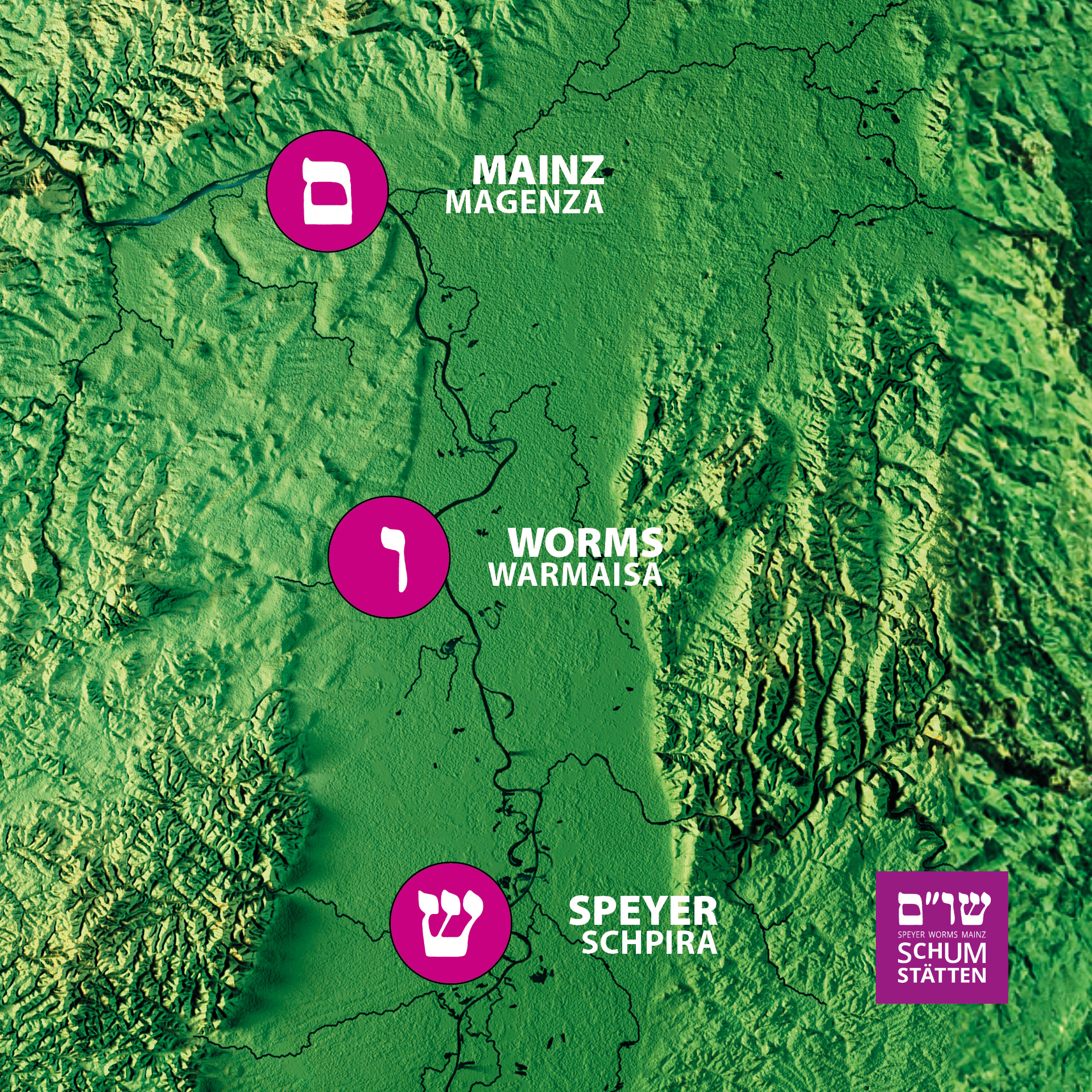
The ShUM Sites tell the story of medieval history and Jewish heritage, representing 1,000 years of vibrant Jewish life and connecting the past, present and future. In today's world, understanding different cultures and religions is crucial for fostering encounter, dialogue, and open coexistence.
To further this understanding, the RegioAkademie Pfalz is offering an online seminar this autumn in cooperation with the ShUM-Cities Association as part of a joint continuing education series for tour guides from the ShUM cities.
Spread over four evenings, Gabriela Schlick-Bamberger, director of Jeschurun, the religious school of the Jewish Community of Frankfurt am Main, will share her insights into Jewish religion, culture, and traditions. The seminar will also explore the significance of Jewish ritual baths, cemeteries, and synagogues in religious practice.The seminar will take place on 22 and 29 October and 5 and 12 November 2026, from 6:00–8:00 p.m. each evening. The cost is €52 (with a minimum of 10 participants) and places are limited to 20 participants.The registration deadline is 2 October 2026.
The seminar can only be booked as a complete package for all four sessions.
For more information and to register, visit www.regioakademie.de. -

In 2021, the ShUM sites in Speyer, Worms, and Mainz were included on the UNESCO World Heritage List, officially recognising an extraordinary chapter in German and European history: One thousand years of Jewish heritage along the Rhine, shaped by scholarship, religious life, cultural exchange and a social impact that extended far beyond the region. Five years later, the ShUM-Cities Association, together with the ShUM cities, numerous partners, the state of Rhineland-Palatinate and local residents, celebrated this special anniversary with a year-long series of diverse festivities. The festivities began with the World Heritage Anniversary on 26 July 2026 at the Jewry Court in Speyer.
From 4 September, an exhibition at the SchUM-Lab in Worms will showcase the ShUM-Cities Association's and the ShUM cities' projects from the past five years, demonstrating how the UNESCO World Heritage Site has evolved since its designation. On 6 September, a special milestone will be reached with the grand opening of the first visitor centre for the ShUM Sites. Located above the 'Old Jewish Cemetery Judensand' in Mainz, the 'Sali-Levi-Haus' will serve as a new gathering place. In future, the visitor centre will provide information about Mainz's rich Jewish history, offer fascinating views of the Judensand and enable visitors to explore the World Heritage Site in Mainz independently.
-
From July 17, the rear section of the Old Jewish Cemetery "Heiliger Sand" in Worms will be temporarily closed to visitors due to essential maintenance work.
In addition, from July 27 to August 2, the cemetery will open at 12:00 noon instead of its regular opening time of 10:00 a.m. These temporary measures are necessary to ensure that the required work can be carried out safely and efficiently while avoiding a full-day closure.
The City of Worms kindly asks visitors for their understanding during this temporary period of restricted access.
-
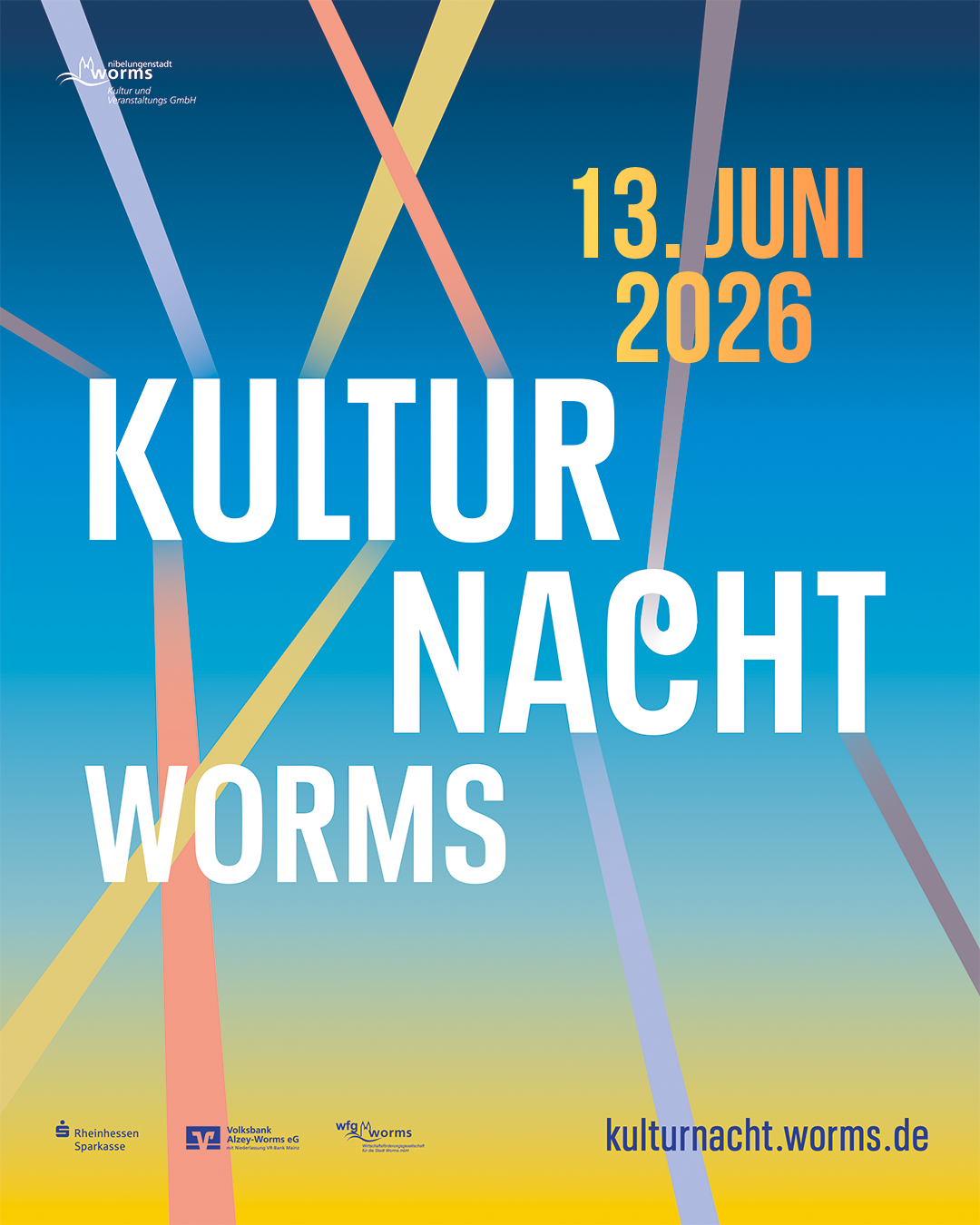
Since April 2026, the mobile visitor center, the "SchUMobil," has been touring its hometown of Worms. At various events, the ShUM-Cities association uses the SchUMobil to share interesting facts about the UNESCO World Heritage ShUM Sites of Speyer, Worms, and Mainz. The next opportunity to experience Germany's first Jewish UNESCO World Heritage Site in an entertaining and interactive way will be on June 13 during Worms Culture Night. For the 18th year in a row, local artists will showcase the city's rich culture and history at over 30 locations.
Participation, wonder, and learning are also on the agenda for this evening, which includes a free children's workshop "Reading and Writing with Jakub." The workshop takes participants on an exciting journey back in time. Together with Jakub, an orphan boy trained as a sorcerer’s apprentice by the famous Jewish scholar MaHaRiL in medieval Worms who must pass an exam to prove his skills, participants will discover the Hebrew alphabet, the Alef-Bet. The workshop is suitable for explorers of all ages. At a painting and crafting station, participants can explore their own initials in Hebrew script and the symbols of the SchUM sites.
SA 13. Juni | 17 bis 22 Uhr
SchUMobil and the children's workshop "Reading and Writing with Jakub: A Journey Through Time," presented by the ShUM-Cities associationIn front of the Trinity Church, Marktplatz 12, 67547 Worms.
-
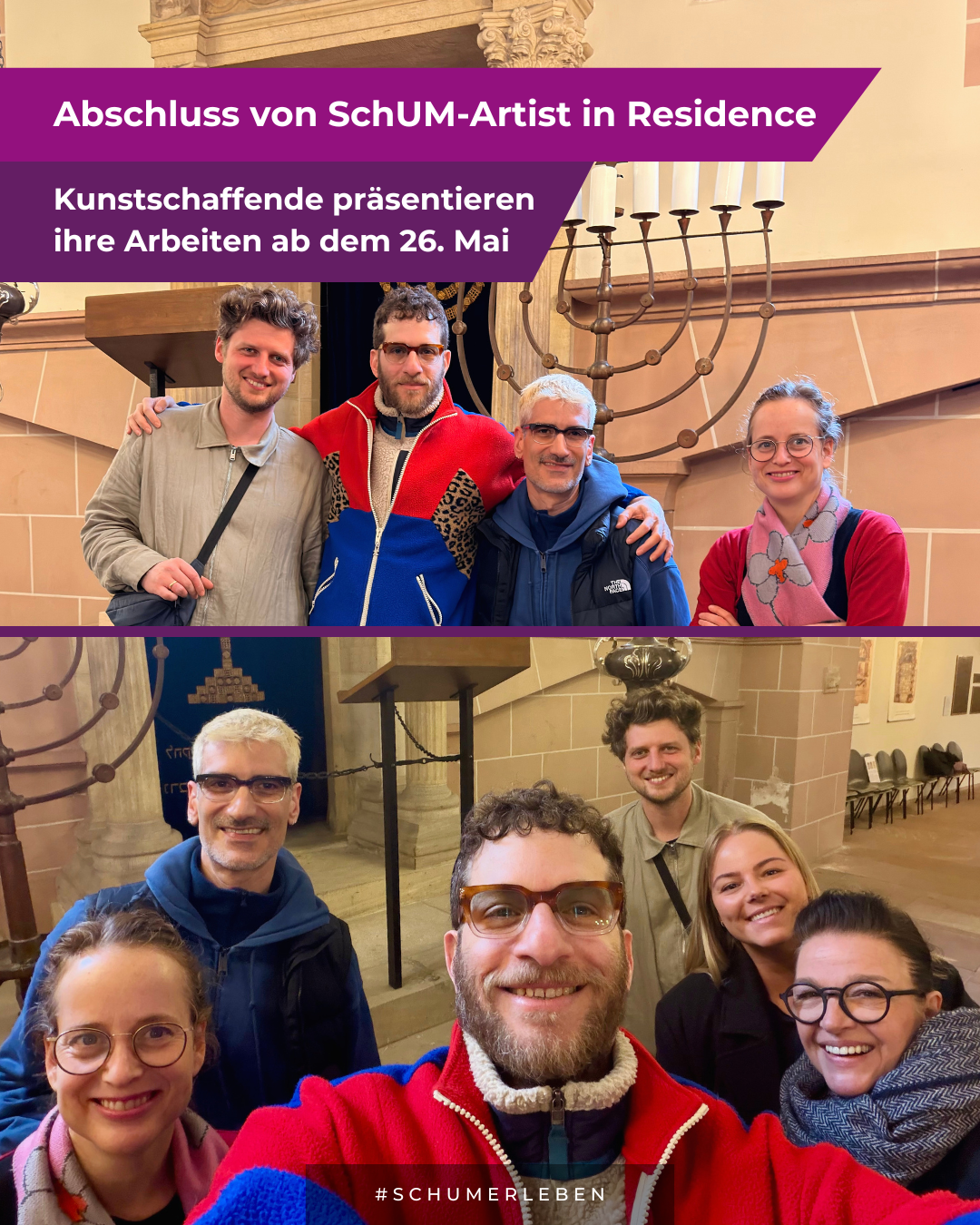
The ShUM-Artist in Residence 2026 program is entering its final phase!
Over the past few weeks, the three fellows Roy Efrat, Atalya Laufer, and Raphaël Fischer-Dieskau have immersed themselves in the history, culture, and traditions of the ShUM communities along the Rhine in order to develop their own artistic projects.
"These projects build bridges between the past, present, and future, offering new perspectives on a unique worldwide cultural heritage" (Birgit Kita).Next week, the resulting works will be presented to the public. Through exhibitions, presentations, and discussions, the ShUM artists will share their work and encourage an exchange of ideas between art, urban society, and history. Free admission and no registration required.
Worms: Tuesday, May 26, 6:00 p.m. Closing event with Atalya Laufer
SchUM-Lab, Neumarkt 10, 67547 Worms
Speyer: Tuesday, May 26, 6:30 p.m. Closing event with Roy Efrat (English)
Museum SchPIRA, Kleine Pfaffengasse 22, 67346 Speyer
Mainz: Wednesday, May 27, at 5:30 p.m. Closing event with Raphaël Fischer-Dieskau
Klarastraße 10, 55116 Mainz (outdoor area)
-
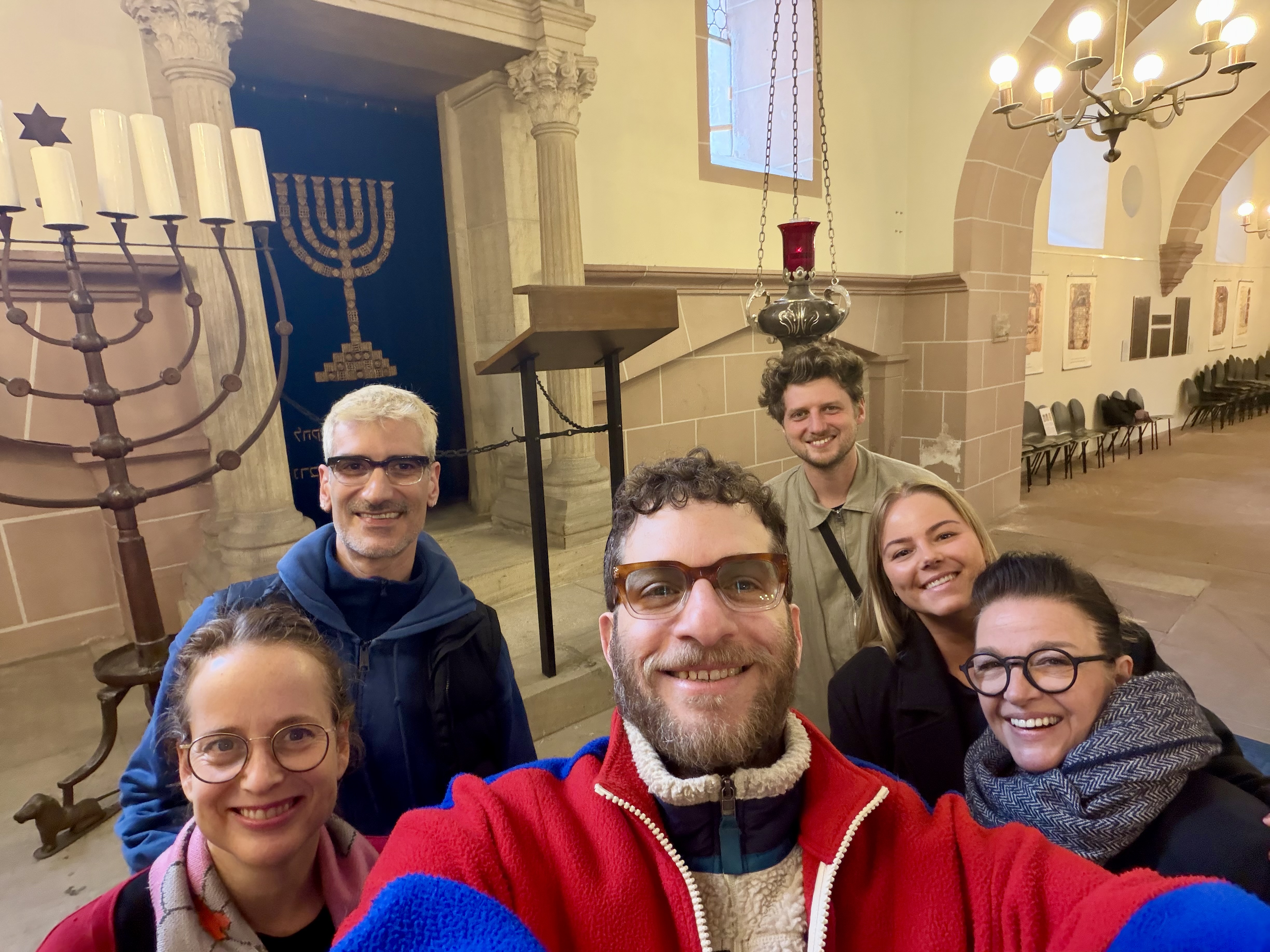
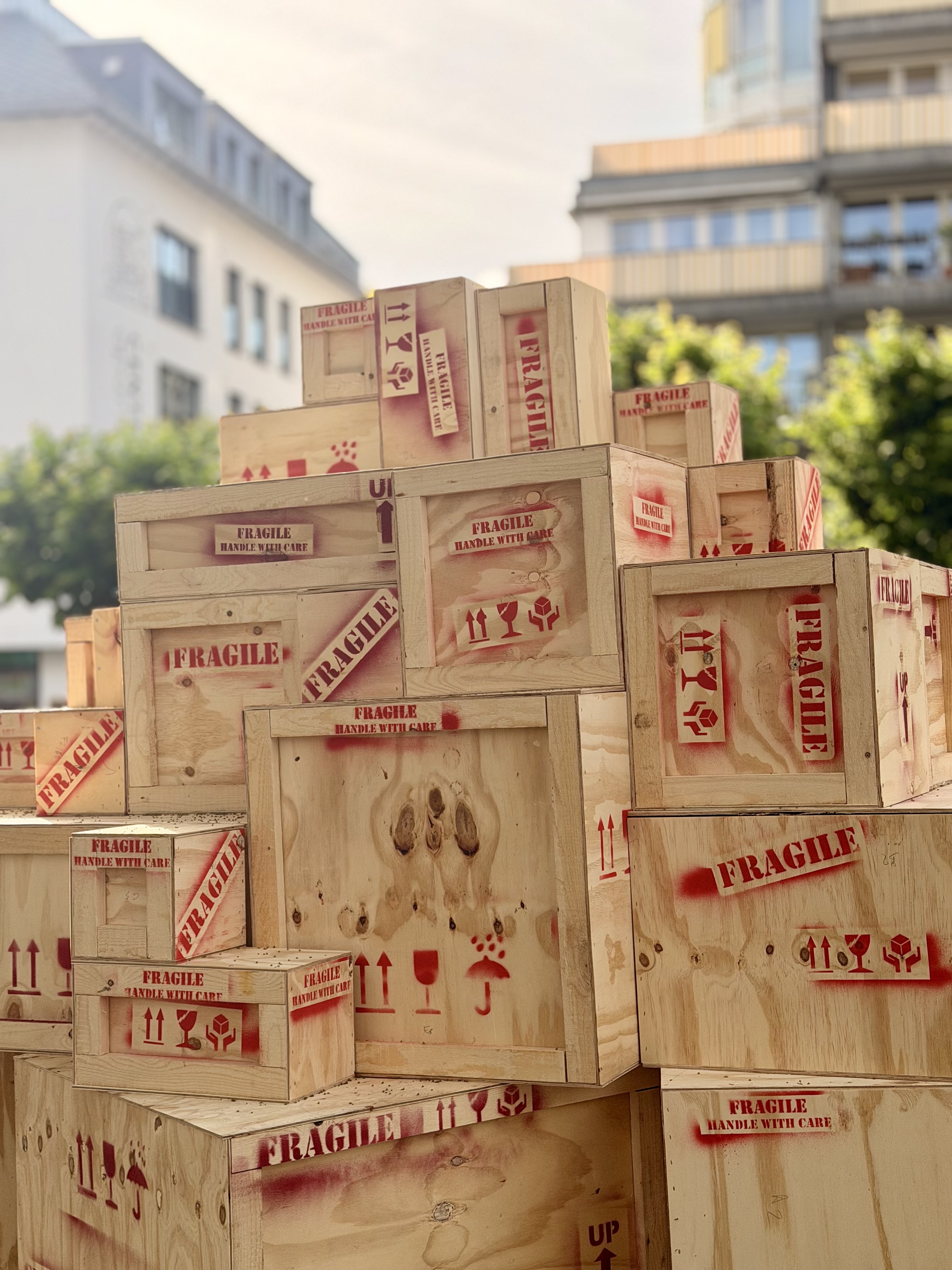
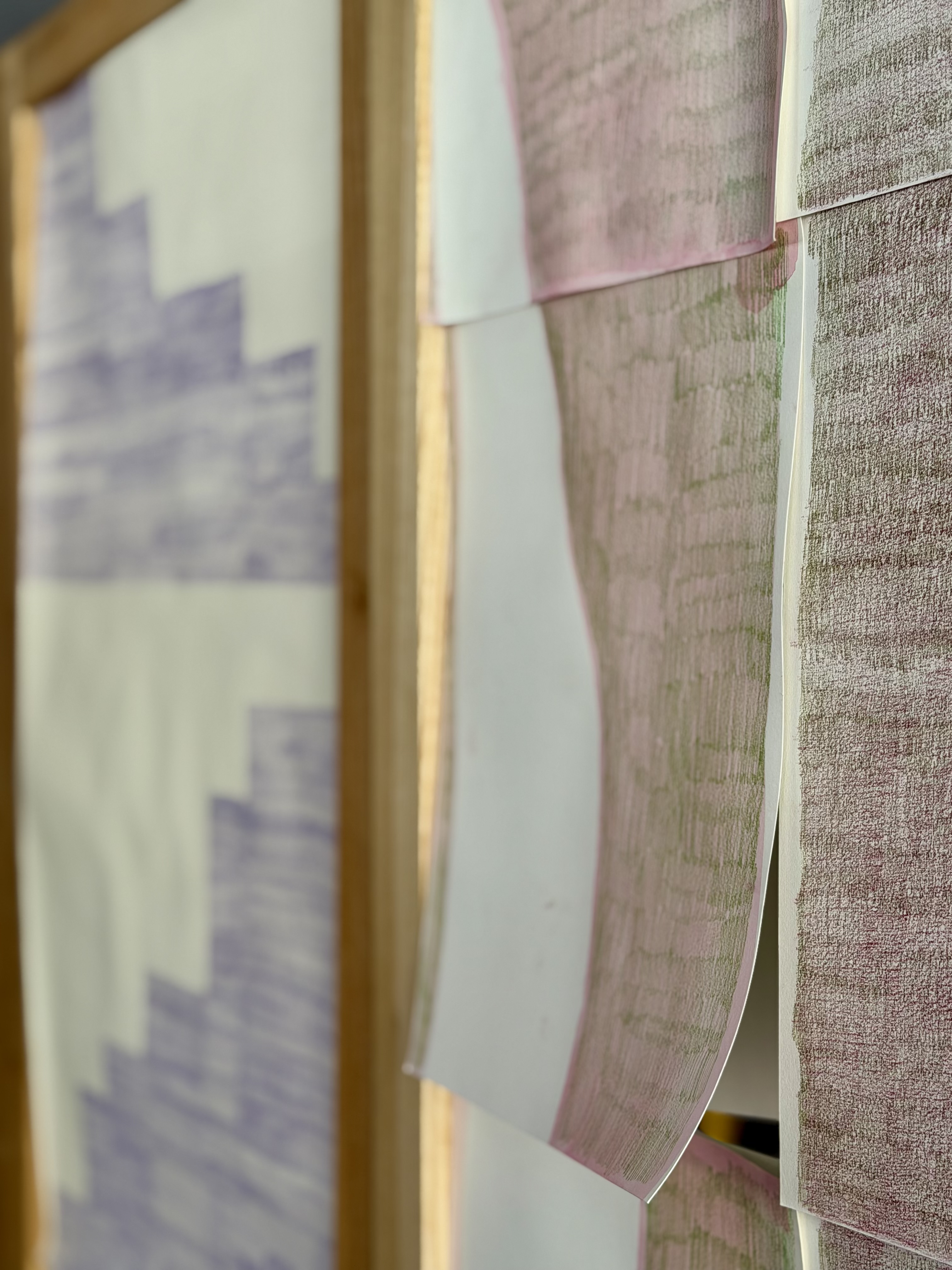
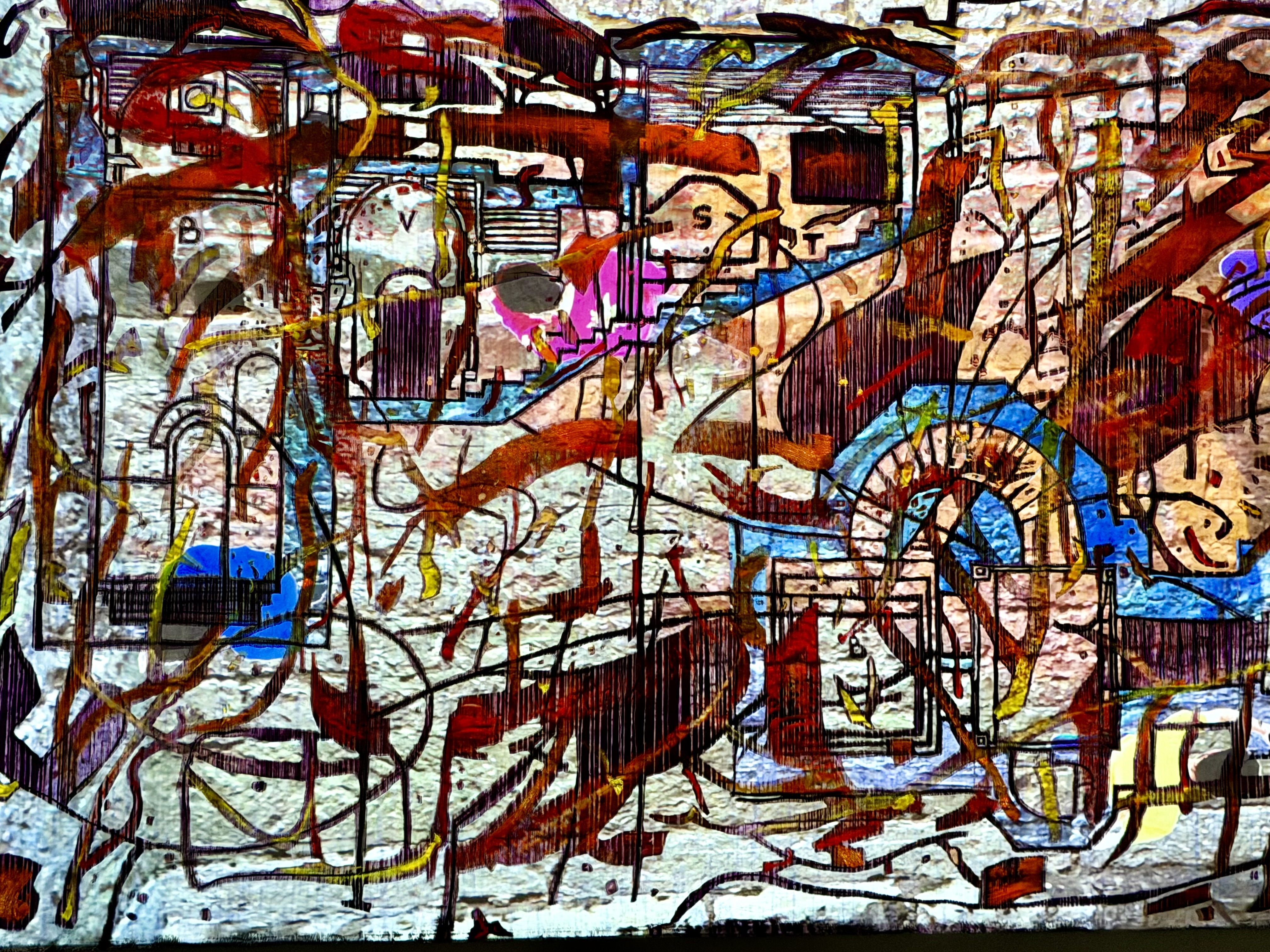
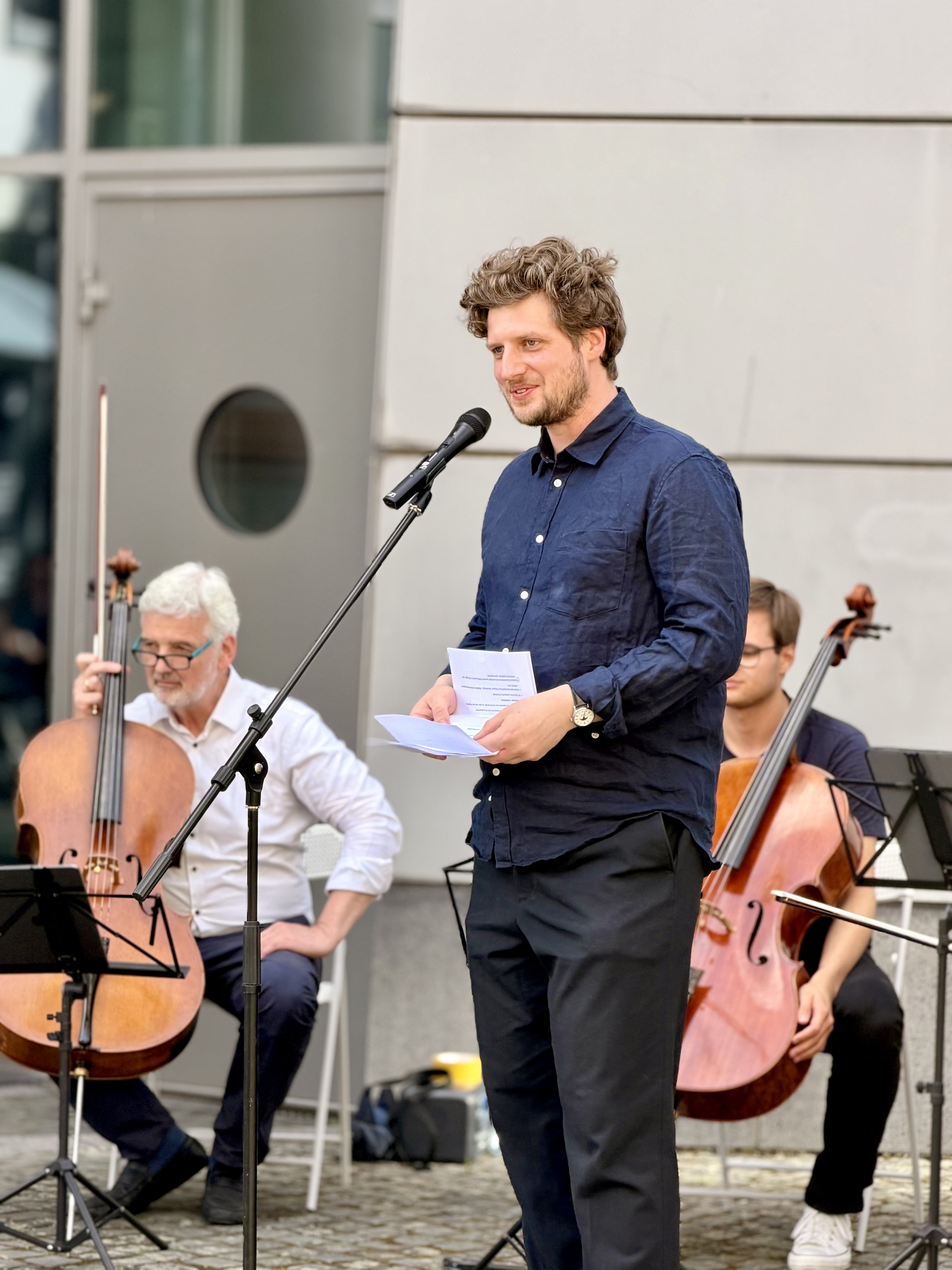
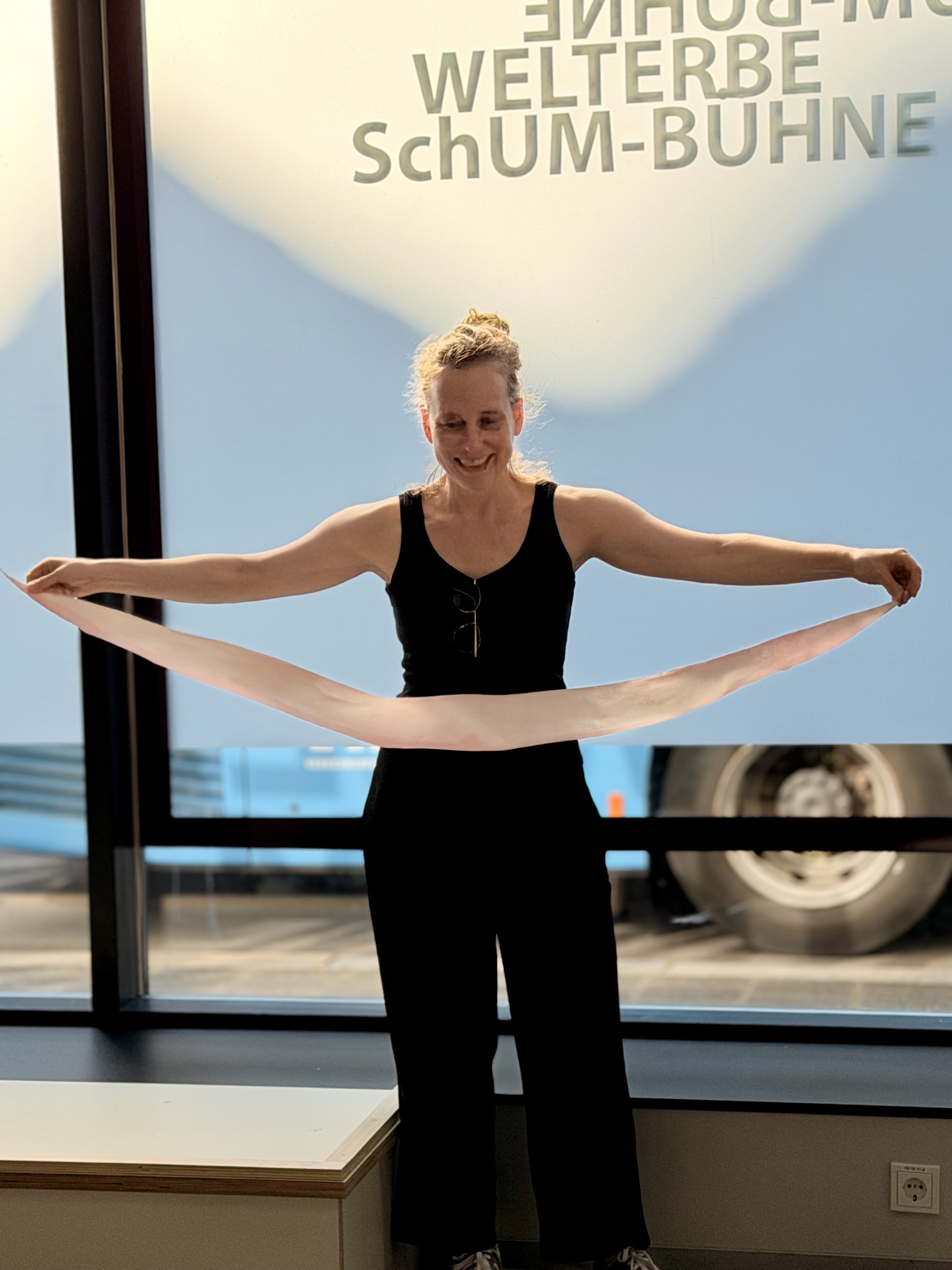
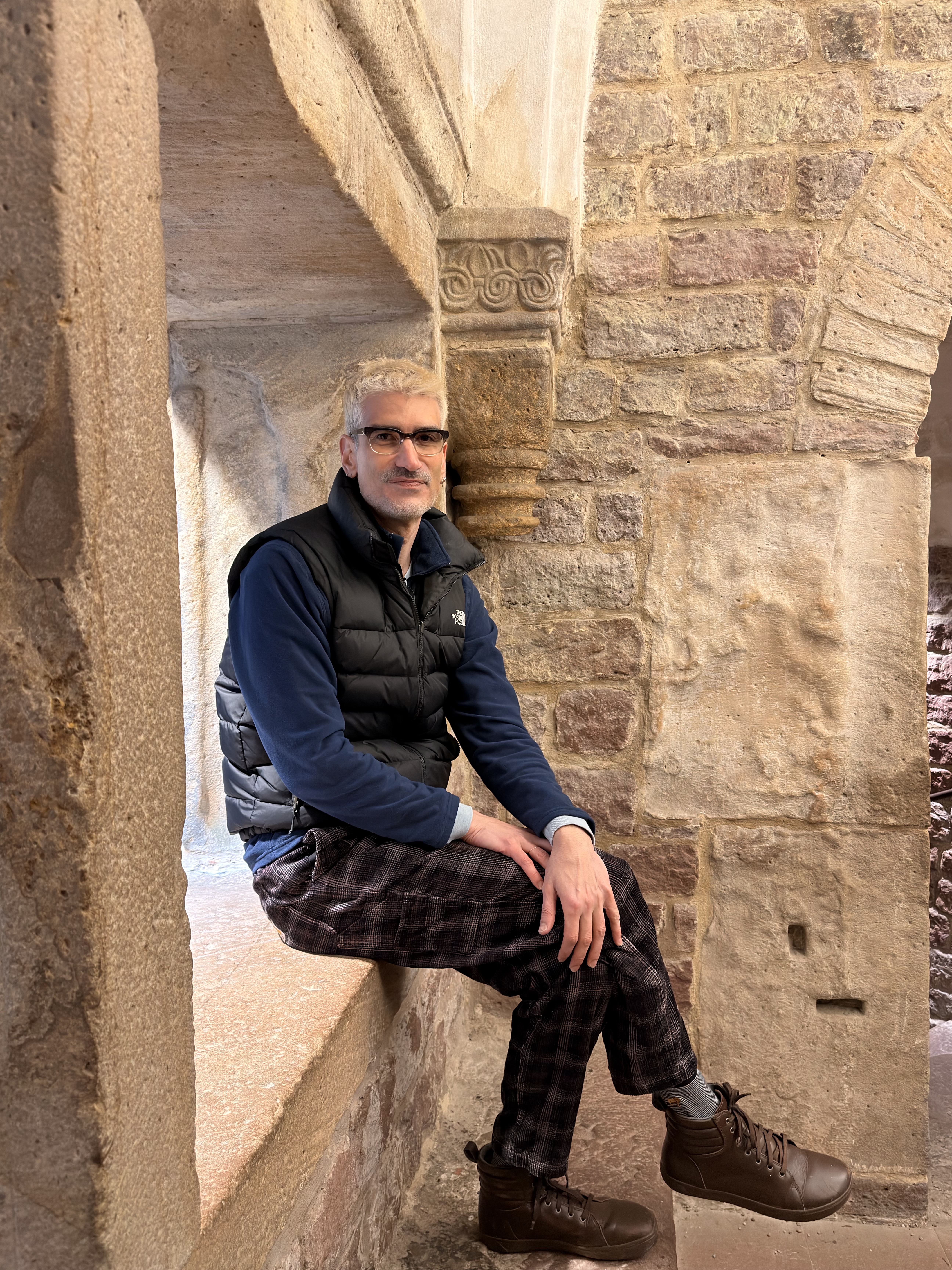
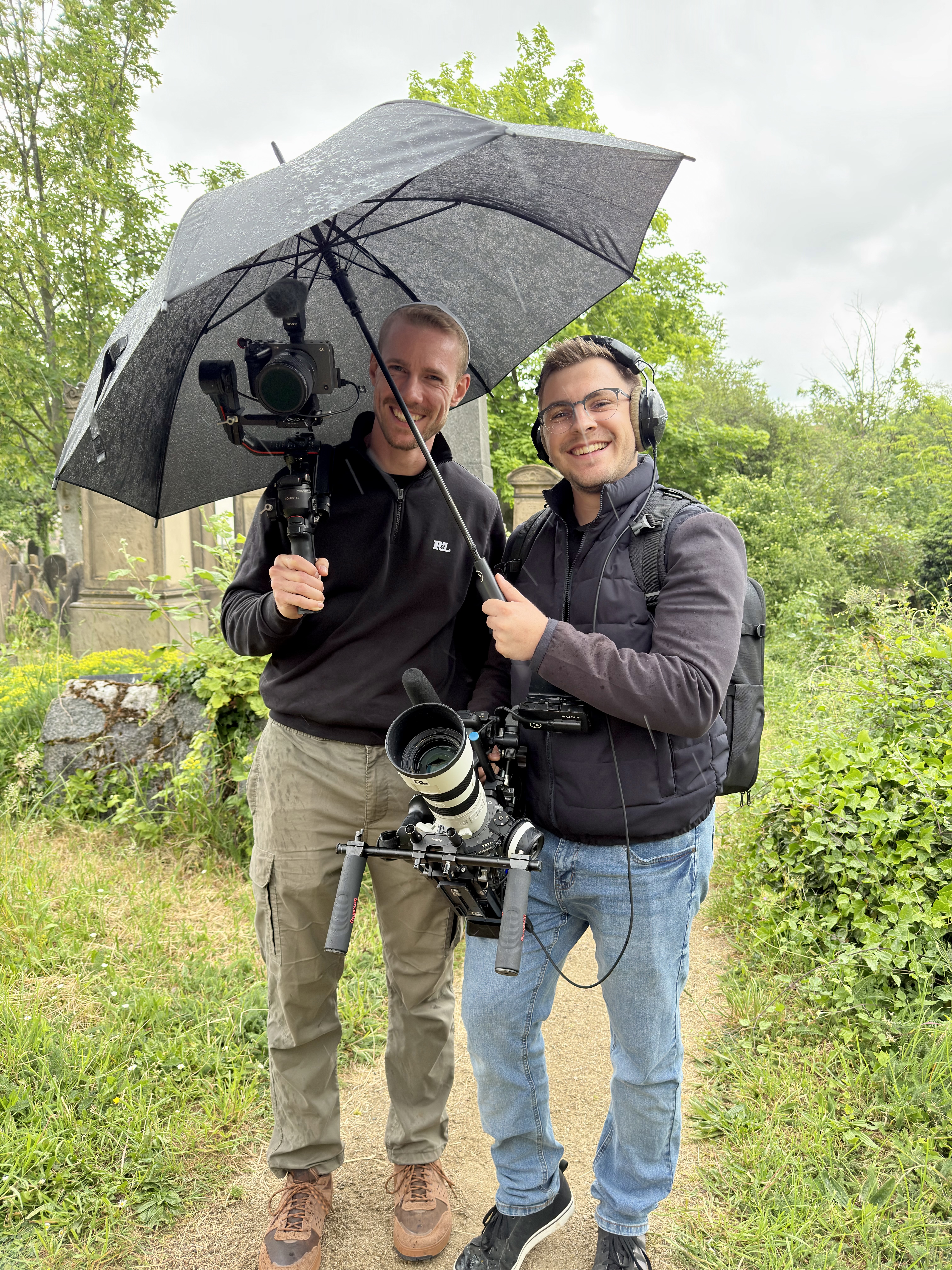
At the end of April, the highly anticipated international ShUM-Artists, Roy Efrat, Atalya Laufer, and Raphaël Fischer-Dieskau, arrived in Speyer, Worms, and Mainz, to begin their residencies. From then until the end of May 2026, they engaged artistically with the history and culture of the ShUM communities in these cities. The residence program aims to bring historical sites, traditions, and spaces of remembrance into dialogue with contemporary artistic perspectives. This creates new ways of engaging with Jewish heritage along the Rhine. During "Artist Talks," the artists presented their projects, creative approaches, and initial impressions of the ShUM cities. The festive closing events provided a forum to present the results of these artistic processes to a broad audience. Through exhibitions, presentations, and discussions, the resulting works were shown in their final form, inviting dialogue between art, history, and the present.The residency was documented on film by the Worms-based agency, Lindwurm. The film will be made available shortly.
The ShUM Artist-in-Residence Program was funded by the Ministry of Family, Women, Culture, and Integration as part of the Rhineland-Palatinate Cultural Summer.
Images
-
-
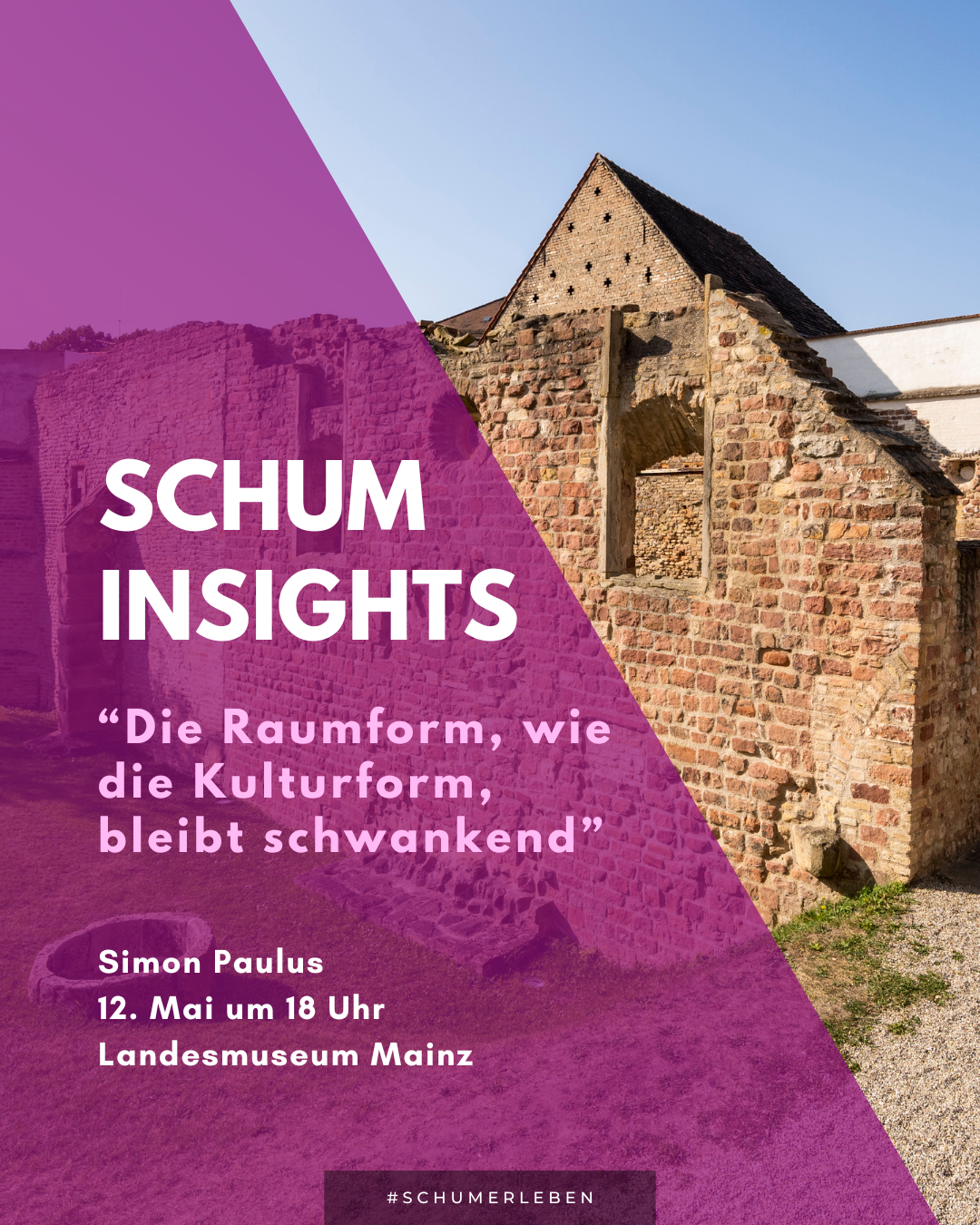
Nearly a century ago, in 1927, the young art historian Richard Krautheimer published the first comprehensive art-historical study of medieval synagogue architecture. His theories shaped research for decades and are still used today as a central reference for describing and characterizing the synagogue as the architectural center of Jewish community life in medieval urban spaces. However, since then, archaeological findings, comparative architectural research, and more in-depth source studies have significantly expanded our understanding of the significance of these buildings, painting a more complex picture than Krautheimer articulated.
To mark the nearly centenary anniversary of this study, PD Dr.-Ing. habil. Simon Paulus will address this topic in his hybrid lecture. The lecture is part of the "SchUM Insights" series, organized by the ShUM-Cities association. It will take place on May 12, 2026, at 6 p.m. at the Landesmuseum Mainz. The lecture will also be available online. Paulus will critically appraise and revise Krautheimer’s groundbreaking work. Starting with the synagogues of the ShUM communities, he will shed light on the historical significance of these buildings and present contemporary discourses and future perspectives in research on the architectural infrastructure and topography of Jewish residential quarters, drawing on current interdisciplinary approaches.
Please register via email by 12:00 p.m. on May 11 at anmeldung_at_gdke.rlp.de. Participants will receive the access link via email after the registration deadline. Participation is free of charge.
-
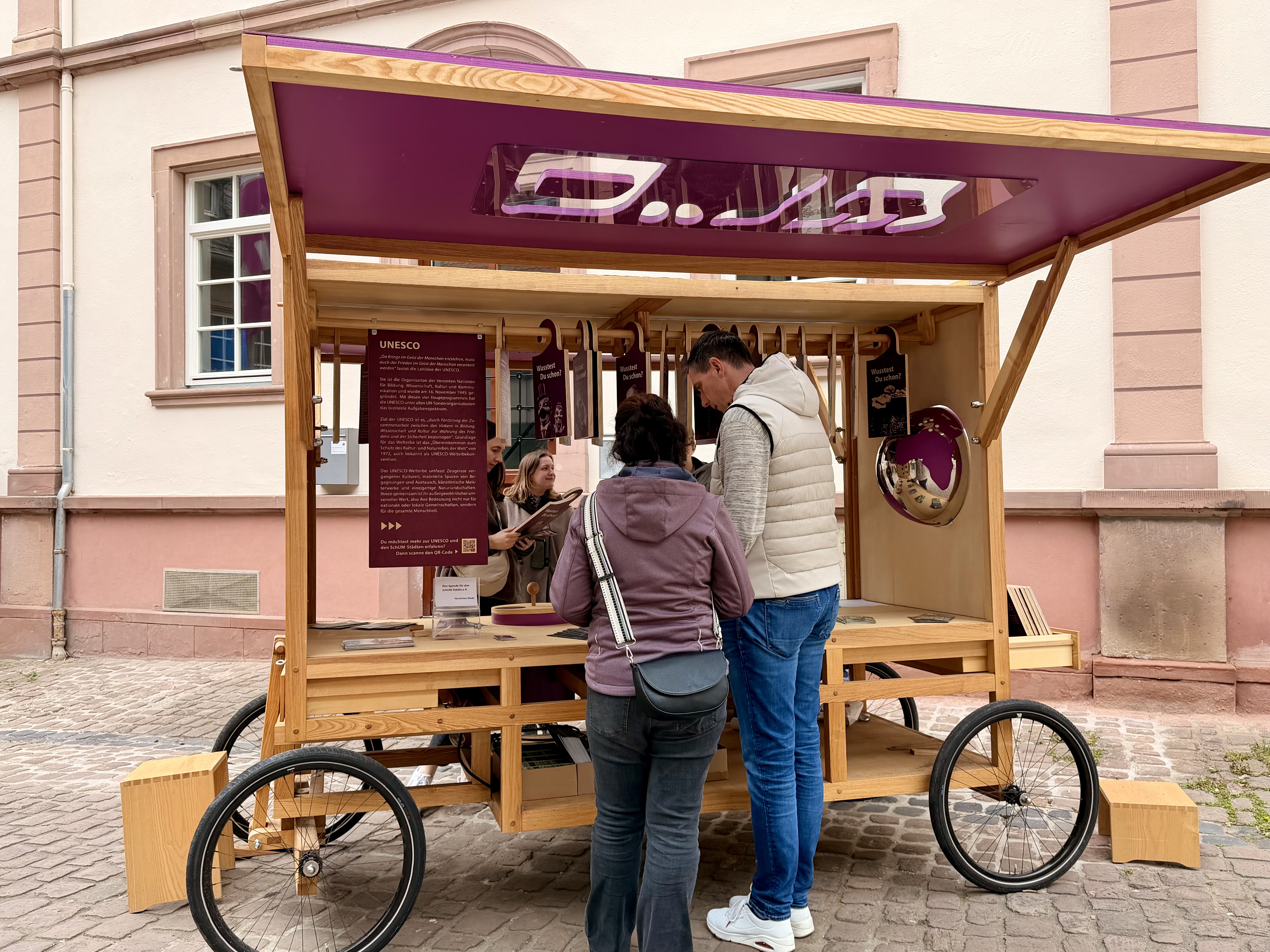
SchUMobil Meets Weinmeile: From April 23 to 26, 2026, the area between the Luther Monument and Luginsland in Worms will be transformed into a lively promenade for all ages.
Curious explorers will be happy to know that we'll also be there with the SchUMobil on the weekend!An exciting journey of discovery through the history, traditions, and culture of the UNESCO World Heritage ShUM Sites of Speyer, Worms, and Mainz awaits you.
The focus is on the regional and global significance of the ShUM sites:- What exactly is ShUM?
- Which World Heritage components are in Speyer, Worms, and Mainz, and what makes them special worldwide?
- Which Jewish rituals and customs are part of Ashkenazi everyday culture?
Small, interactive stations—such as the engaging "Did You Know?" panels—invite visitors of all ages to discover the Jewish heritage along the Rhine in a playful way and to gain a better understanding of Jewish culture.
Forecourt of the Heylshof Museum
Saturday, April 25, 3–8 p.m.
Sunday, April 26, 12–6 p.m. -
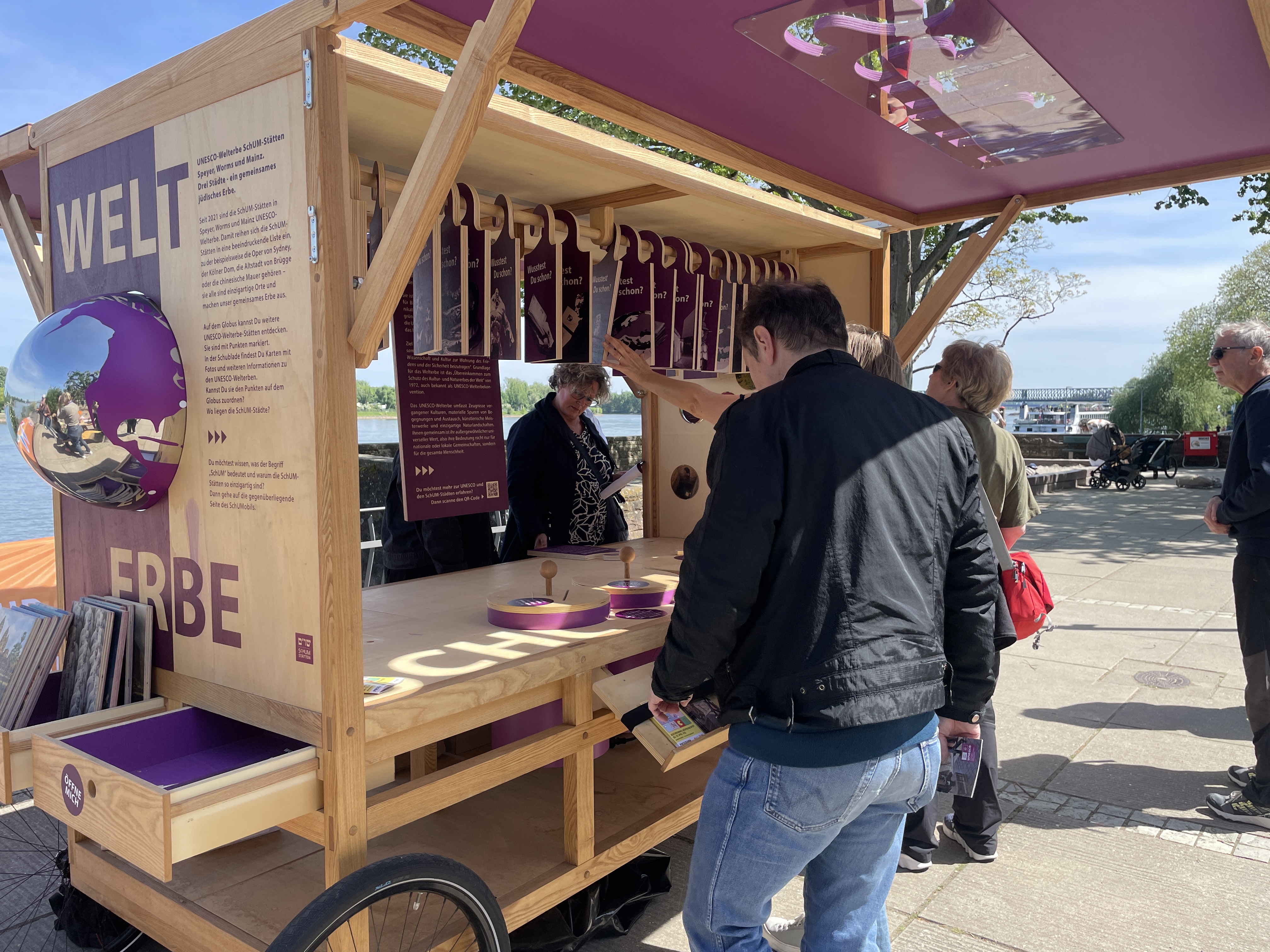
In 2024, the “SchUMobil” took its first trip to the ShUM-City of Speyer. Notable visitors included Talya Lador-Fresher, the Consul General of Israel for Southern Germany, who visited in August with Minister President Alexander Schweitzer, and Interior Minister Michael Ebling, who visited during the nationwide opening of National Heritage Day in September. The following year, the mobile visitor center debuted in Mainz appearing at events such as the opening celebration of the Rhineland-Palatinate Cultural Summer, the Museum Night, the Science Market, and the open house of the Jewish Community of Mainz-Rheinhessen. In the anniversary year of the ShUM Sites' designation as UNESCO World Heritage Sites, the SchUMobil will return to Worms and be on display at various events.
The first opportunity to visit will be on April 12 during the "Worms blüht auf" event weekend. From 12:00 p.m. to 5:00 p.m., the SchUMobil, together with the ShUM-Cities e.V., will invite visitors to Synagogue District for a journey of discovery into the history, tradition, and culture of the UNESCO World Heritage ShUM Sites Speyer, Worms, and Mainz. Other events will take place during the "Wormser Weinmeile" on April 25 and 26 and on UNESCO World Heritage Day on June 7. The SchUMobil will also be present at the "Wormser Kulturnacht" on June 13. A special highlight will be the children's workshop "Reading and Writing with Jakub: A Journey Back in Time." In this free workshop organized by ShUM-Cities e.V., participants will hear the story of Jakub, an orphan who was trained as a sorcerer’s apprentice in Worms by the Jewish scholar MaHaRiL. Jakub had to pass an exam to prove himself. Participants will learn the Hebrew alphabet, the Alef-Bet, alongside Jakub and discover the unique Jewish heritage along the Rhine with the SchUMobil in a playful way.
About the SchUMobil
The SchUMobil is an educational program that takes place in public spaces. It offers visitors a compact and easily accessible journey through Germany’s first Jewish UNESCO World Heritage Site. It highlights the global and regional significance of ShUM. What exactly is SchUM? Which World Heritage components are in Speyer, Worms, and Mainz, and what makes them special? Which Jewish rituals and customs are part of Ashkenazi everyday culture? Small, interactive stations - such as the engaging "Did You Know?" panels - invite visitors of all ages to discover the UNESCO World Heritage Site in a playful way. Learning about the rich Jewish history along the Rhine and the coexistence of Christians and Jews fosters mutual understanding, tolerance, and respect that lasts.
In 2023, the city of Worms developed the SchUMobil in collaboration with the ShUM-Cities e.V. for the UNESCO World Heritage ShUM Sites Speyer, Worms, and Mainz, expanding it in 2024.
ständige Angebote
-
On 6 September, together with the City of Mainz and numerous guests from the worlds of politics, civil society and culture, we celebrated the opening of the first ShUM Visitor Centre for our serial World Heritage Site. The exhibition at the "Sali-Levi-Haus" allows visitors to learn about the rich Jewish history of the ShUM communities and the ShUM Sites in Speyer, Worms, and Mainz. The visitor centre also offers fascinating views of the Judensand and allows visitors to explore the Old Jewish Cemetery Judensand independently.
'With the opening of the "Sali-Levi-Haus" today, we have created a place where nearly 1,000 years of Jewish history along the Rhine come to life. It is a place of education, encounter and exchange that will promote understanding, tolerance and mutual respect across all boundaries, and we are very pleased about that' (Birgit Kita).
The Sali-Levi-Haus is open Tuesday to Sunday:
April–September: 10 a.m.–5 p.m.
October–March: 10 a.m.–4 p.m.
Individual visits to the Judensand are also possible on Wednesdays, Thursdays, Fridays, and Sundays:
April–September: 9 a.m.–6 p.m.
October–March: 10 a.m.–4 p.m.For more information, visit www.judensand-mainz.de.
-
The ShUM Sites tell the story of medieval history and Jewish heritage, representing 1,000 years of vibrant Jewish life and connecting the past, present and future. In today's world, understanding different cultures and religions is crucial for fostering encounter, dialogue, and open coexistence.
To further this understanding, the RegioAkademie Pfalz is offering an online seminar this autumn in cooperation with the ShUM-Cities Association as part of a joint continuing education series for tour guides from the ShUM cities.
Spread over four evenings, Gabriela Schlick-Bamberger, director of Jeschurun, the religious school of the Jewish Community of Frankfurt am Main, will share her insights into Jewish religion, culture, and traditions. The seminar will also explore the significance of Jewish ritual baths, cemeteries, and synagogues in religious practice.The seminar will take place on 22 and 29 October and 5 and 12 November 2026, from 6:00–8:00 p.m. each evening. The cost is €52 (with a minimum of 10 participants) and places are limited to 20 participants.The registration deadline is 2 October 2026.
The seminar can only be booked as a complete package for all four sessions.
For more information and to register, visit www.regioakademie.de. -
In 2021, the ShUM sites in Speyer, Worms, and Mainz were included on the UNESCO World Heritage List, officially recognising an extraordinary chapter in German and European history: One thousand years of Jewish heritage along the Rhine, shaped by scholarship, religious life, cultural exchange and a social impact that extended far beyond the region. Five years later, the ShUM-Cities Association, together with the ShUM cities, numerous partners, the state of Rhineland-Palatinate and local residents, celebrated this special anniversary with a year-long series of diverse festivities. The festivities began with the World Heritage Anniversary on 26 July 2026 at the Jewry Court in Speyer.
From 4 September, an exhibition at the SchUM-Lab in Worms will showcase the ShUM-Cities Association's and the ShUM cities' projects from the past five years, demonstrating how the UNESCO World Heritage Site has evolved since its designation. On 6 September, a special milestone will be reached with the grand opening of the first visitor centre for the ShUM Sites. Located above the 'Old Jewish Cemetery Judensand' in Mainz, the 'Sali-Levi-Haus' will serve as a new gathering place. In future, the visitor centre will provide information about Mainz's rich Jewish history, offer fascinating views of the Judensand and enable visitors to explore the World Heritage Site in Mainz independently.
-
From July 17, the rear section of the Old Jewish Cemetery "Heiliger Sand" in Worms will be temporarily closed to visitors due to essential maintenance work.
In addition, from July 27 to August 2, the cemetery will open at 12:00 noon instead of its regular opening time of 10:00 a.m. These temporary measures are necessary to ensure that the required work can be carried out safely and efficiently while avoiding a full-day closure.
The City of Worms kindly asks visitors for their understanding during this temporary period of restricted access.
-
Since April 2026, the mobile visitor center, the "SchUMobil," has been touring its hometown of Worms. At various events, the ShUM-Cities association uses the SchUMobil to share interesting facts about the UNESCO World Heritage ShUM Sites of Speyer, Worms, and Mainz. The next opportunity to experience Germany's first Jewish UNESCO World Heritage Site in an entertaining and interactive way will be on June 13 during Worms Culture Night. For the 18th year in a row, local artists will showcase the city's rich culture and history at over 30 locations.
Participation, wonder, and learning are also on the agenda for this evening, which includes a free children's workshop "Reading and Writing with Jakub." The workshop takes participants on an exciting journey back in time. Together with Jakub, an orphan boy trained as a sorcerer’s apprentice by the famous Jewish scholar MaHaRiL in medieval Worms who must pass an exam to prove his skills, participants will discover the Hebrew alphabet, the Alef-Bet. The workshop is suitable for explorers of all ages. At a painting and crafting station, participants can explore their own initials in Hebrew script and the symbols of the SchUM sites.
SA 13. Juni | 17 bis 22 Uhr
SchUMobil and the children's workshop "Reading and Writing with Jakub: A Journey Through Time," presented by the ShUM-Cities associationIn front of the Trinity Church, Marktplatz 12, 67547 Worms.
-
The ShUM-Artist in Residence 2026 program is entering its final phase!
Over the past few weeks, the three fellows Roy Efrat, Atalya Laufer, and Raphaël Fischer-Dieskau have immersed themselves in the history, culture, and traditions of the ShUM communities along the Rhine in order to develop their own artistic projects.
"These projects build bridges between the past, present, and future, offering new perspectives on a unique worldwide cultural heritage" (Birgit Kita).Next week, the resulting works will be presented to the public. Through exhibitions, presentations, and discussions, the ShUM artists will share their work and encourage an exchange of ideas between art, urban society, and history. Free admission and no registration required.
Worms: Tuesday, May 26, 6:00 p.m. Closing event with Atalya Laufer
SchUM-Lab, Neumarkt 10, 67547 Worms
Speyer: Tuesday, May 26, 6:30 p.m. Closing event with Roy Efrat (English)
Museum SchPIRA, Kleine Pfaffengasse 22, 67346 Speyer
Mainz: Wednesday, May 27, at 5:30 p.m. Closing event with Raphaël Fischer-Dieskau
Klarastraße 10, 55116 Mainz (outdoor area)
-
At the end of April, the highly anticipated international ShUM-Artists, Roy Efrat, Atalya Laufer, and Raphaël Fischer-Dieskau, arrived in Speyer, Worms, and Mainz, to begin their residencies. From then until the end of May 2026, they engaged artistically with the history and culture of the ShUM communities in these cities. The residence program aims to bring historical sites, traditions, and spaces of remembrance into dialogue with contemporary artistic perspectives. This creates new ways of engaging with Jewish heritage along the Rhine. During "Artist Talks," the artists presented their projects, creative approaches, and initial impressions of the ShUM cities. The festive closing events provided a forum to present the results of these artistic processes to a broad audience. Through exhibitions, presentations, and discussions, the resulting works were shown in their final form, inviting dialogue between art, history, and the present.The residency was documented on film by the Worms-based agency, Lindwurm. The film will be made available shortly.
The ShUM Artist-in-Residence Program was funded by the Ministry of Family, Women, Culture, and Integration as part of the Rhineland-Palatinate Cultural Summer.
Images
-
-
Nearly a century ago, in 1927, the young art historian Richard Krautheimer published the first comprehensive art-historical study of medieval synagogue architecture. His theories shaped research for decades and are still used today as a central reference for describing and characterizing the synagogue as the architectural center of Jewish community life in medieval urban spaces. However, since then, archaeological findings, comparative architectural research, and more in-depth source studies have significantly expanded our understanding of the significance of these buildings, painting a more complex picture than Krautheimer articulated.
To mark the nearly centenary anniversary of this study, PD Dr.-Ing. habil. Simon Paulus will address this topic in his hybrid lecture. The lecture is part of the "SchUM Insights" series, organized by the ShUM-Cities association. It will take place on May 12, 2026, at 6 p.m. at the Landesmuseum Mainz. The lecture will also be available online. Paulus will critically appraise and revise Krautheimer’s groundbreaking work. Starting with the synagogues of the ShUM communities, he will shed light on the historical significance of these buildings and present contemporary discourses and future perspectives in research on the architectural infrastructure and topography of Jewish residential quarters, drawing on current interdisciplinary approaches.
Please register via email by 12:00 p.m. on May 11 at anmeldung_at_gdke.rlp.de. Participants will receive the access link via email after the registration deadline. Participation is free of charge.
-
SchUMobil Meets Weinmeile: From April 23 to 26, 2026, the area between the Luther Monument and Luginsland in Worms will be transformed into a lively promenade for all ages.
Curious explorers will be happy to know that we'll also be there with the SchUMobil on the weekend!An exciting journey of discovery through the history, traditions, and culture of the UNESCO World Heritage ShUM Sites of Speyer, Worms, and Mainz awaits you.
The focus is on the regional and global significance of the ShUM sites:- What exactly is ShUM?
- Which World Heritage components are in Speyer, Worms, and Mainz, and what makes them special worldwide?
- Which Jewish rituals and customs are part of Ashkenazi everyday culture?
Small, interactive stations—such as the engaging "Did You Know?" panels—invite visitors of all ages to discover the Jewish heritage along the Rhine in a playful way and to gain a better understanding of Jewish culture.
Forecourt of the Heylshof Museum
Saturday, April 25, 3–8 p.m.
Sunday, April 26, 12–6 p.m. -
In 2024, the “SchUMobil” took its first trip to the ShUM-City of Speyer. Notable visitors included Talya Lador-Fresher, the Consul General of Israel for Southern Germany, who visited in August with Minister President Alexander Schweitzer, and Interior Minister Michael Ebling, who visited during the nationwide opening of National Heritage Day in September. The following year, the mobile visitor center debuted in Mainz appearing at events such as the opening celebration of the Rhineland-Palatinate Cultural Summer, the Museum Night, the Science Market, and the open house of the Jewish Community of Mainz-Rheinhessen. In the anniversary year of the ShUM Sites' designation as UNESCO World Heritage Sites, the SchUMobil will return to Worms and be on display at various events.
The first opportunity to visit will be on April 12 during the "Worms blüht auf" event weekend. From 12:00 p.m. to 5:00 p.m., the SchUMobil, together with the ShUM-Cities e.V., will invite visitors to Synagogue District for a journey of discovery into the history, tradition, and culture of the UNESCO World Heritage ShUM Sites Speyer, Worms, and Mainz. Other events will take place during the "Wormser Weinmeile" on April 25 and 26 and on UNESCO World Heritage Day on June 7. The SchUMobil will also be present at the "Wormser Kulturnacht" on June 13. A special highlight will be the children's workshop "Reading and Writing with Jakub: A Journey Back in Time." In this free workshop organized by ShUM-Cities e.V., participants will hear the story of Jakub, an orphan who was trained as a sorcerer’s apprentice in Worms by the Jewish scholar MaHaRiL. Jakub had to pass an exam to prove himself. Participants will learn the Hebrew alphabet, the Alef-Bet, alongside Jakub and discover the unique Jewish heritage along the Rhine with the SchUMobil in a playful way.
About the SchUMobil
The SchUMobil is an educational program that takes place in public spaces. It offers visitors a compact and easily accessible journey through Germany’s first Jewish UNESCO World Heritage Site. It highlights the global and regional significance of ShUM. What exactly is SchUM? Which World Heritage components are in Speyer, Worms, and Mainz, and what makes them special? Which Jewish rituals and customs are part of Ashkenazi everyday culture? Small, interactive stations - such as the engaging "Did You Know?" panels - invite visitors of all ages to discover the UNESCO World Heritage Site in a playful way. Learning about the rich Jewish history along the Rhine and the coexistence of Christians and Jews fosters mutual understanding, tolerance, and respect that lasts.
In 2023, the city of Worms developed the SchUMobil in collaboration with the ShUM-Cities e.V. for the UNESCO World Heritage ShUM Sites Speyer, Worms, and Mainz, expanding it in 2024.