
Archive
The information on forthcoming and past events is available only on the German language version of the website. There you can find an overview of dates, places, and topics.
Termine
-
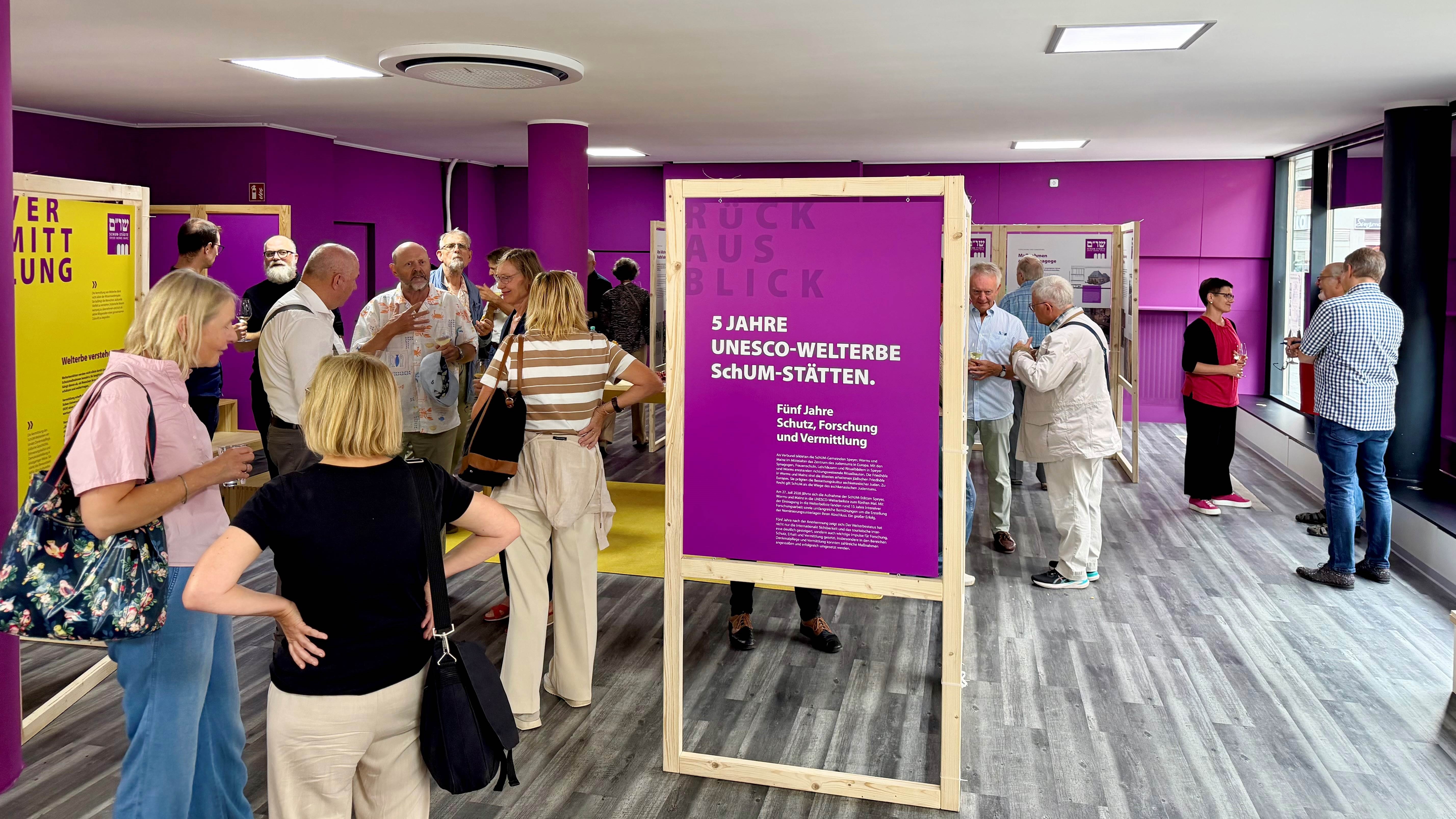
What happened after Germany's first Jewish World Heritage site was established? What has happened in Speyer, Worms, and Mainz since then? What projects have been launched, what measures have been implemented, and what plans are in store for the future? What role does the SchUM Association play in protecting, researching, and promoting this World Heritage site?
These questions were the focus of the exhibition, "5 Years of UNESCO World Heritage SchUM Sites: Five Years of Protection, Research, and Education,” presented by the SchUM Cities of Speyer, Worms, and Mainz e.V. at the SchUM-Lab in Worms from September 4 to October 15.
The exhibition showcased the extensive restoration and renovation efforts undertaken to safeguard the World Heritage components and presented current research findings. The exhibition also offered a behind-the-scenes look at the work of the SchUM Association and presented numerous projects, events, and educational programs developed over the past five years.
"Five years as a UNESCO World Heritage Site is a good occasion to pause, highlight developments, and at the same time look ahead. With this exhibition, we want to show how diverse the work surrounding the SchUM sites is and how many people are involved in it” (Birgit Kita).
-

On 6 September, together with the City of Mainz and numerous guests from the worlds of politics, civil society and culture, we celebrated the opening of the first ShUM Visitor Centre for our serial World Heritage Site. The exhibition at the "Sali-Levi-Haus" allows visitors to learn about the rich Jewish history of the ShUM communities and the ShUM Sites in Speyer, Worms, and Mainz. The visitor centre also offers fascinating views of the Judensand and allows visitors to explore the Old Jewish Cemetery Judensand independently.
'With the opening of the "Sali-Levi-Haus" today, we have created a place where nearly 1,000 years of Jewish history along the Rhine come to life. It is a place of education, encounter and exchange that will promote understanding, tolerance and mutual respect across all boundaries, and we are very pleased about that' (Birgit Kita).
The Sali-Levi-Haus is open Tuesday to Sunday:
April–September: 10 a.m.–5 p.m.
October–March: 10 a.m.–4 p.m.
Individual visits to the Judensand are also possible on Wednesdays, Thursdays, Fridays, and Sundays:
April–September: 9 a.m.–6 p.m.
October–March: 10 a.m.–4 p.m.For more information, visit www.judensand-mainz.de.
-
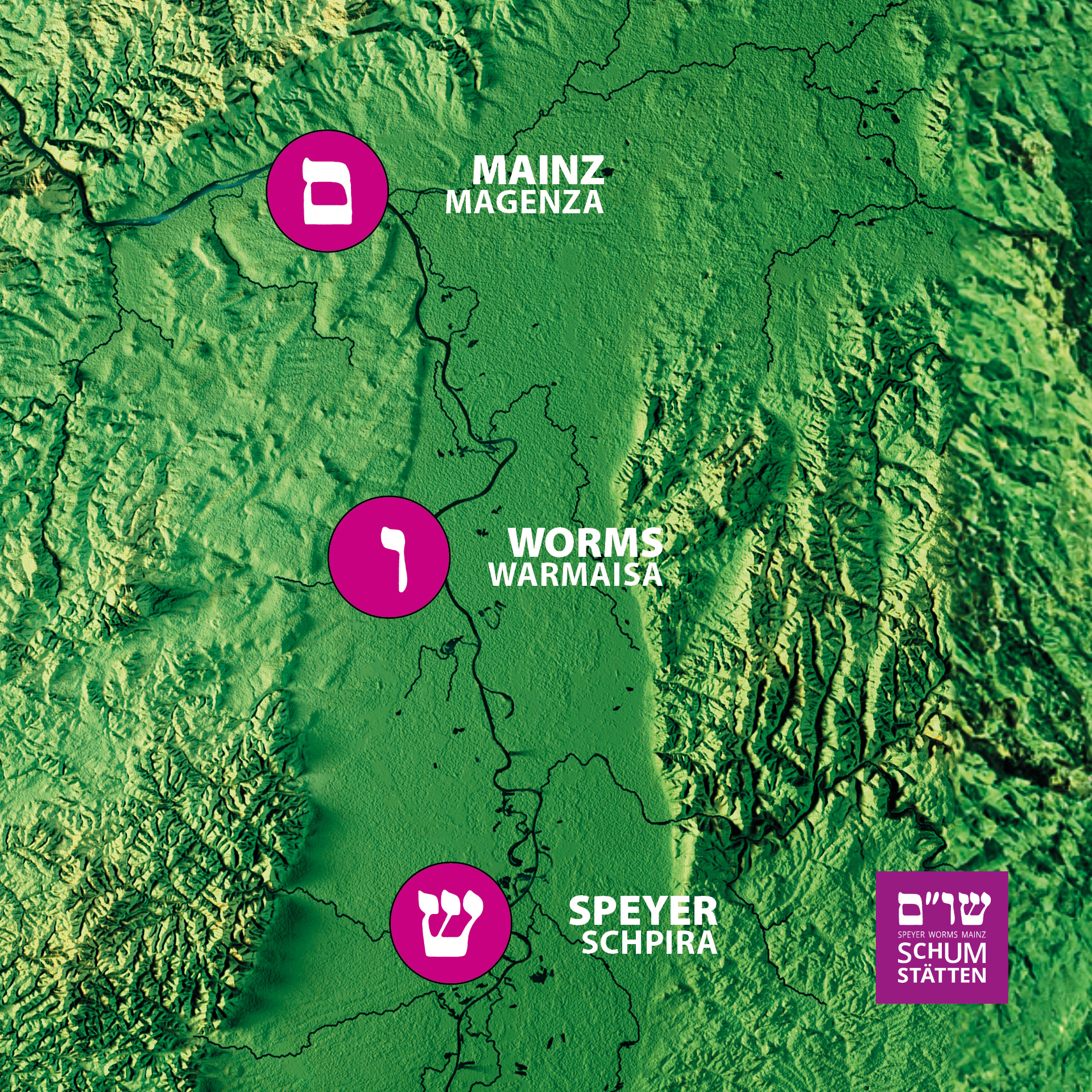
The ShUM Sites tell the story of medieval history and Jewish heritage, representing 1,000 years of vibrant Jewish life and connecting the past, present and future. In today's world, understanding different cultures and religions is crucial for fostering encounter, dialogue, and open coexistence.
To further this understanding, the RegioAkademie Pfalz is offering an online seminar this autumn in cooperation with the ShUM-Cities Association as part of a joint continuing education series for tour guides from the ShUM cities.
Spread over four evenings, Gabriela Schlick-Bamberger, director of Jeschurun, the religious school of the Jewish Community of Frankfurt am Main, will share her insights into Jewish religion, culture, and traditions. The seminar will also explore the significance of Jewish ritual baths, cemeteries, and synagogues in religious practice.The seminar will take place on 22 and 29 October and 5 and 12 November 2026, from 6:00–8:00 p.m. each evening. The cost is €52 (with a minimum of 10 participants) and places are limited to 20 participants.The registration deadline is 2 October 2026.
The seminar can only be booked as a complete package for all four sessions.
For more information and to register, visit www.regioakademie.de. -

In 2021, the ShUM sites in Speyer, Worms, and Mainz were included on the UNESCO World Heritage List, officially recognising an extraordinary chapter in German and European history: One thousand years of Jewish heritage along the Rhine, shaped by scholarship, religious life, cultural exchange and a social impact that extended far beyond the region. Five years later, the ShUM-Cities Association, together with the ShUM cities, numerous partners, the state of Rhineland-Palatinate and local residents, celebrated this special anniversary with a year-long series of diverse festivities. The festivities began with the World Heritage Anniversary on 26 July 2026 at the Jewry Court in Speyer.
From 4 September, an exhibition at the SchUM-Lab in Worms will showcase the ShUM-Cities Association's and the ShUM cities' projects from the past five years, demonstrating how the UNESCO World Heritage Site has evolved since its designation. On 6 September, a special milestone will be reached with the grand opening of the first visitor centre for the ShUM Sites. Located above the 'Old Jewish Cemetery Judensand' in Mainz, the 'Sali-Levi-Haus' will serve as a new gathering place. In future, the visitor centre will provide information about Mainz's rich Jewish history, offer fascinating views of the Judensand and enable visitors to explore the World Heritage Site in Mainz independently.
-

From July 17, the rear section of the Old Jewish Cemetery "Heiliger Sand" in Worms will be temporarily closed to visitors due to essential maintenance work.
In addition, from July 27 to August 2, the cemetery will open at 12:00 noon instead of its regular opening time of 10:00 a.m. These temporary measures are necessary to ensure that the required work can be carried out safely and efficiently while avoiding a full-day closure.
The City of Worms kindly asks visitors for their understanding during this temporary period of restricted access.
-
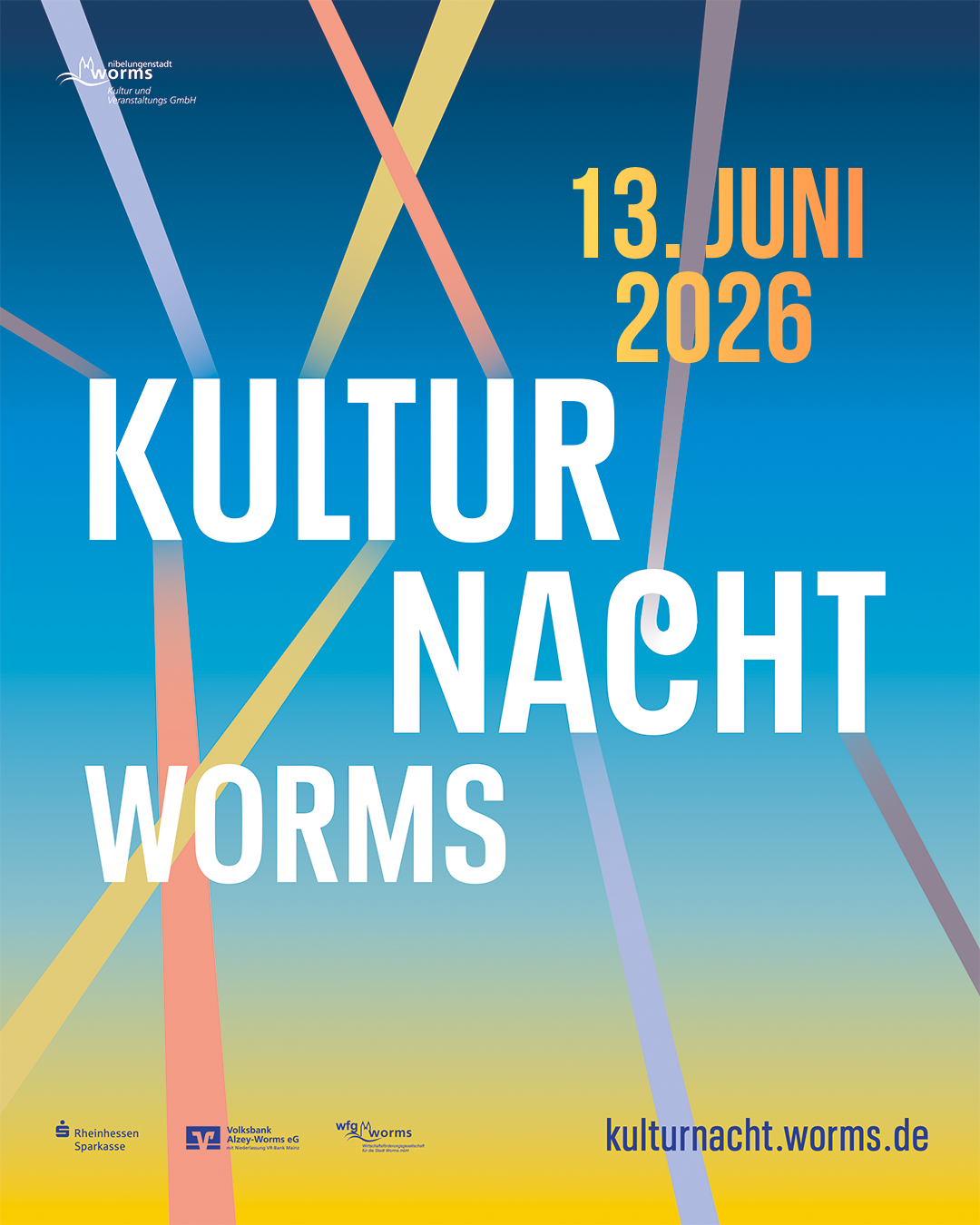
Since April 2026, the mobile visitor center, the "SchUMobil," has been touring its hometown of Worms. At various events, the ShUM-Cities association uses the SchUMobil to share interesting facts about the UNESCO World Heritage ShUM Sites of Speyer, Worms, and Mainz. The next opportunity to experience Germany's first Jewish UNESCO World Heritage Site in an entertaining and interactive way will be on June 13 during Worms Culture Night. For the 18th year in a row, local artists will showcase the city's rich culture and history at over 30 locations.
Participation, wonder, and learning are also on the agenda for this evening, which includes a free children's workshop "Reading and Writing with Jakub." The workshop takes participants on an exciting journey back in time. Together with Jakub, an orphan boy trained as a sorcerer’s apprentice by the famous Jewish scholar MaHaRiL in medieval Worms who must pass an exam to prove his skills, participants will discover the Hebrew alphabet, the Alef-Bet. The workshop is suitable for explorers of all ages. At a painting and crafting station, participants can explore their own initials in Hebrew script and the symbols of the SchUM sites.
SA 13. Juni | 17 bis 22 Uhr
SchUMobil and the children's workshop "Reading and Writing with Jakub: A Journey Through Time," presented by the ShUM-Cities associationIn front of the Trinity Church, Marktplatz 12, 67547 Worms.
-
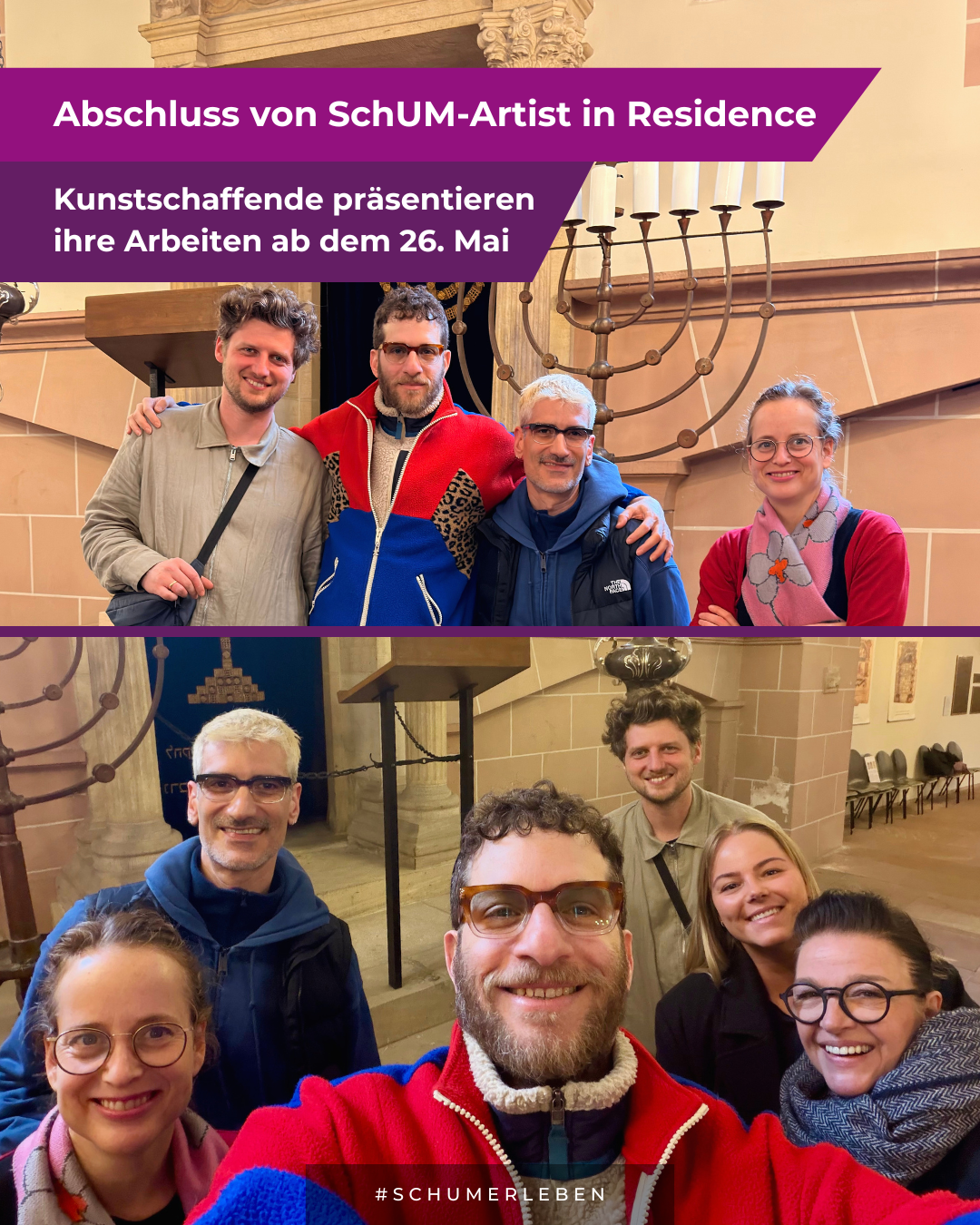
The ShUM-Artist in Residence 2026 program is entering its final phase!
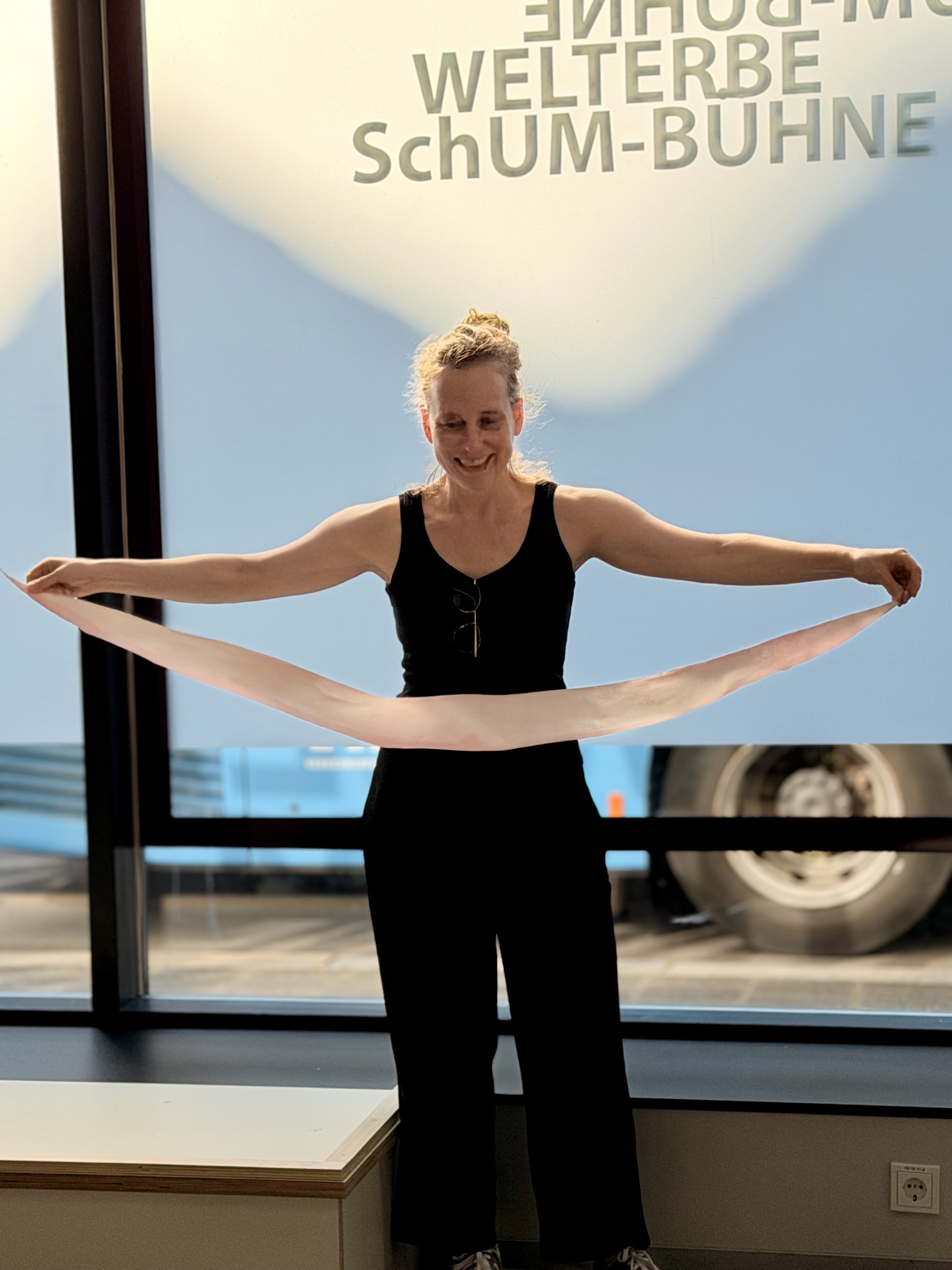
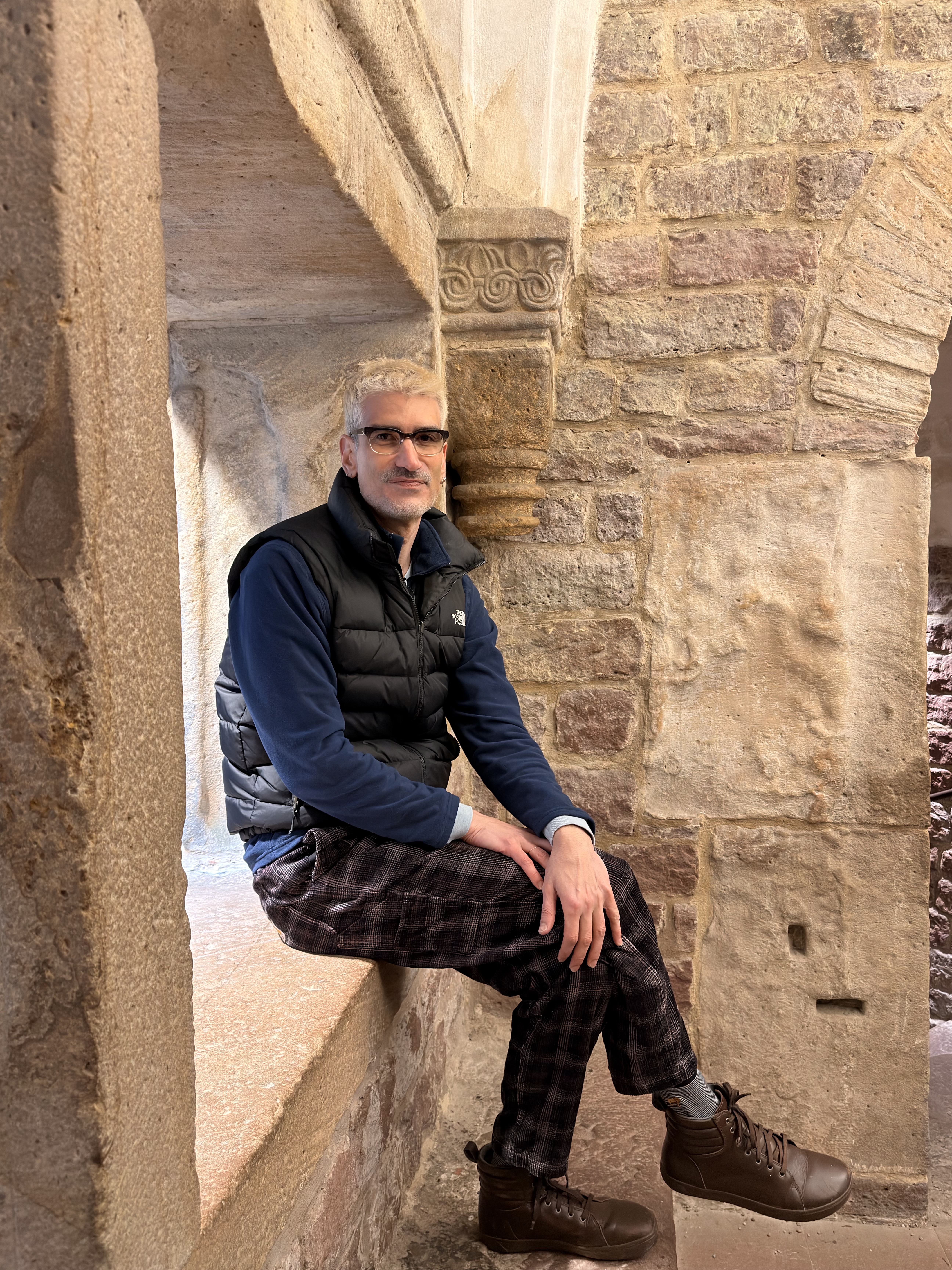
Over the past few weeks, the three fellows Roy Efrat, Atalya Laufer, and Raphaël Fischer-Dieskau have immersed themselves in the history, culture, and traditions of the ShUM communities along the Rhine in order to develop their own artistic projects.
"These projects build bridges between the past, present, and future, offering new perspectives on a unique worldwide cultural heritage" (Birgit Kita).Next week, the resulting works will be presented to the public. Through exhibitions, presentations, and discussions, the ShUM artists will share their work and encourage an exchange of ideas between art, urban society, and history. Free admission and no registration required.
Worms: Tuesday, May 26, 6:00 p.m. Closing event with Atalya Laufer
SchUM-Lab, Neumarkt 10, 67547 Worms
Speyer: Tuesday, May 26, 6:30 p.m. Closing event with Roy Efrat (English)
Museum SchPIRA, Kleine Pfaffengasse 22, 67346 Speyer
Mainz: Wednesday, May 27, at 5:30 p.m. Closing event with Raphaël Fischer-Dieskau
Klarastraße 10, 55116 Mainz (outdoor area)
-
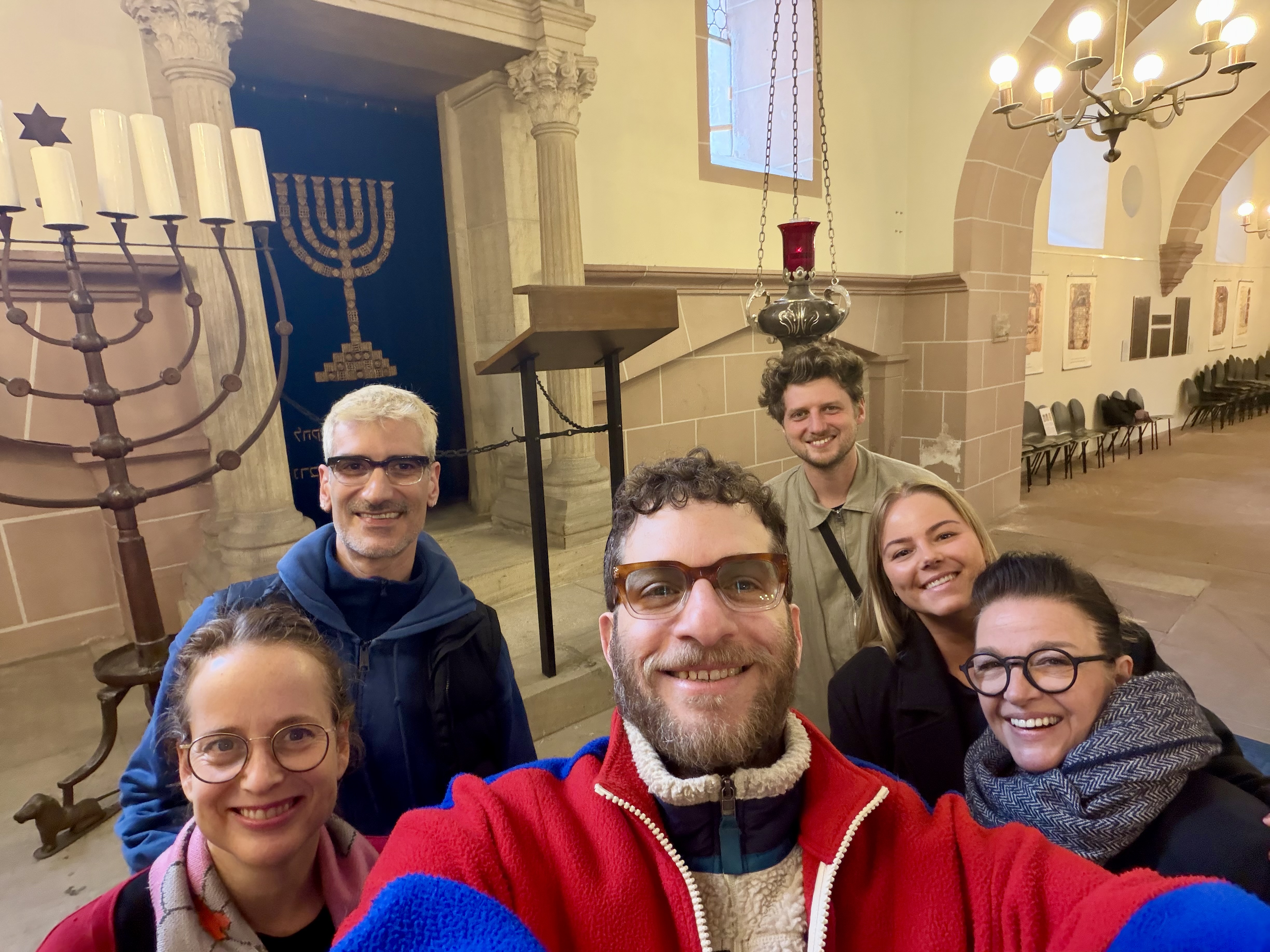
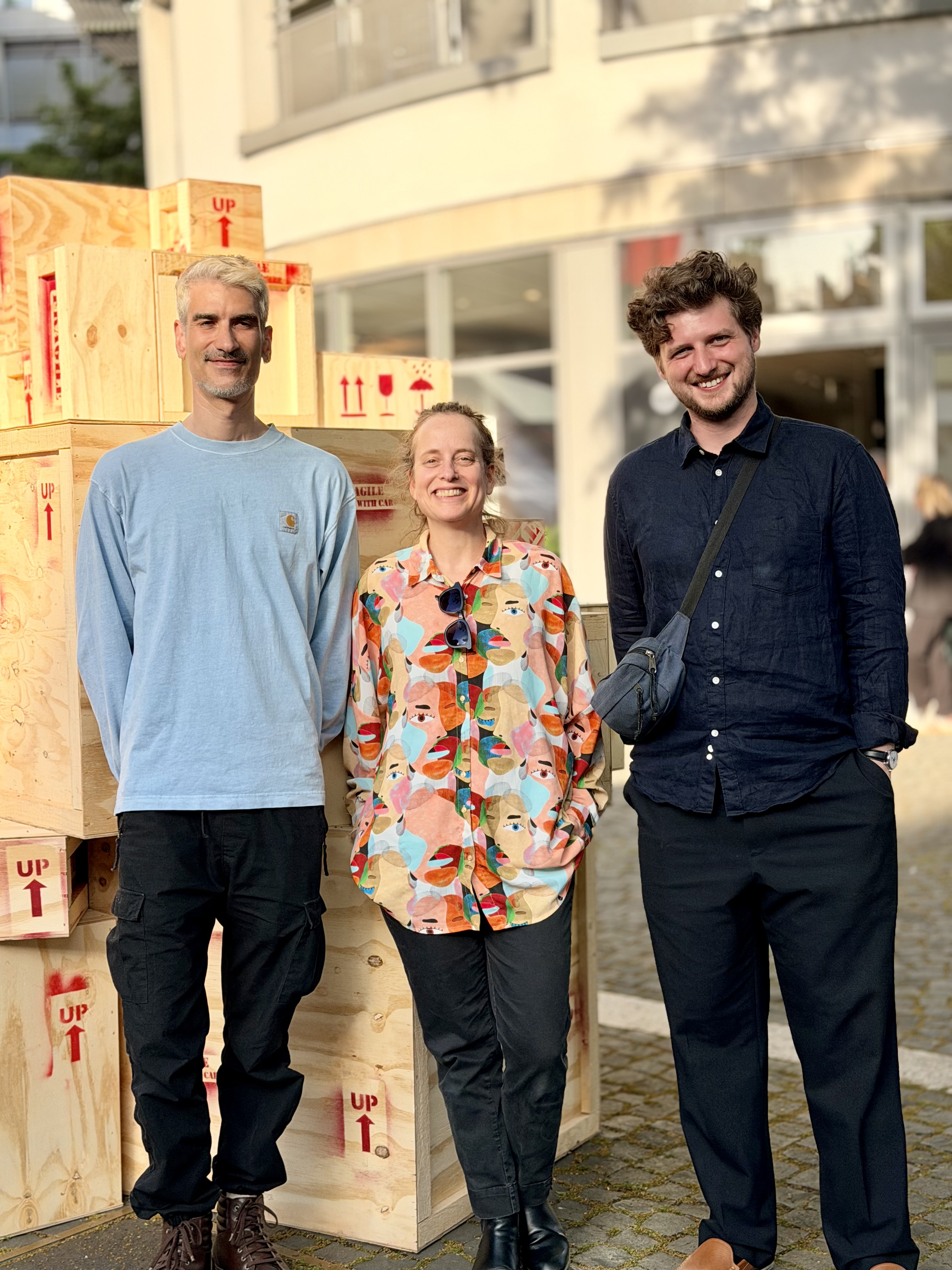
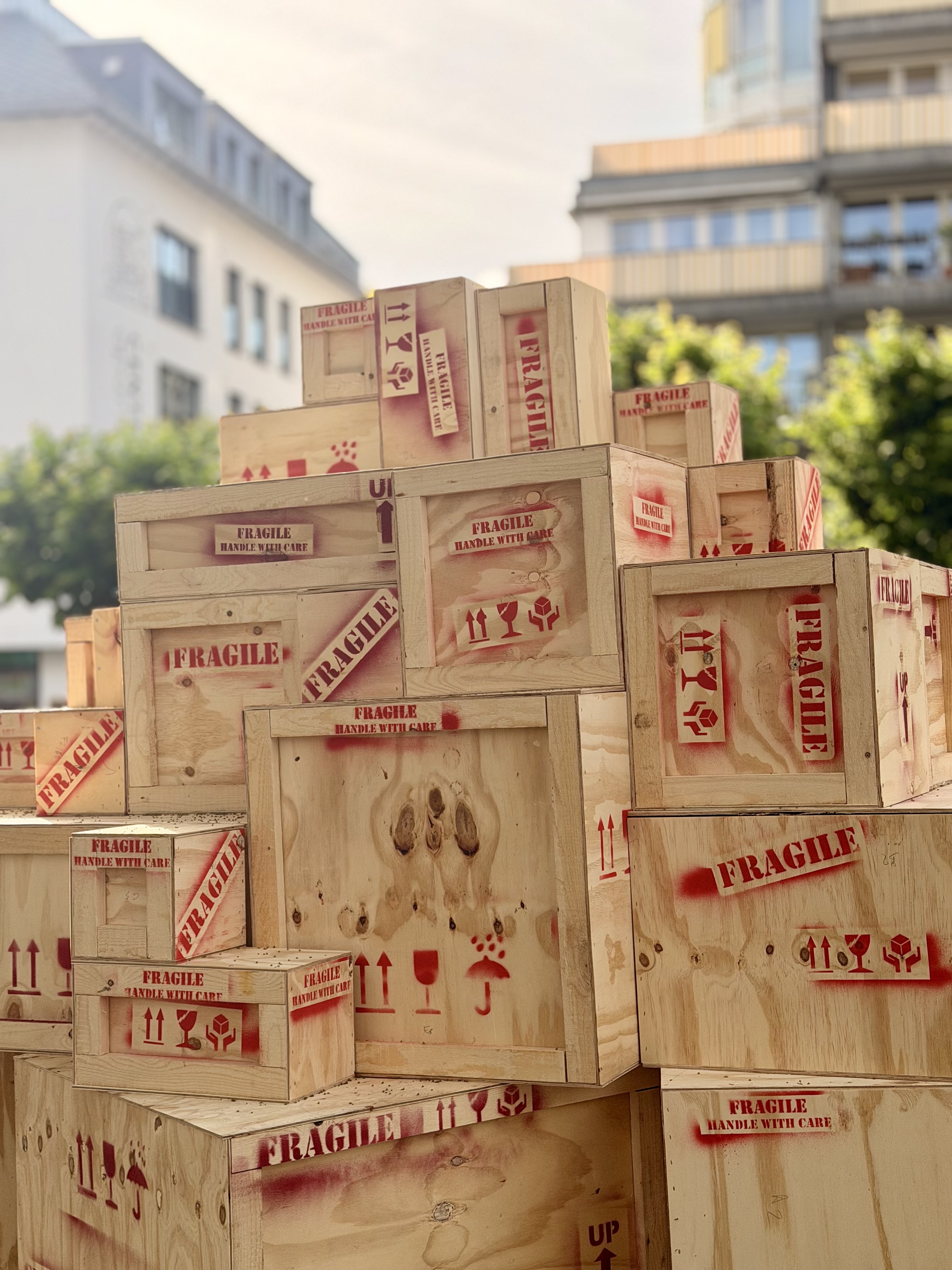
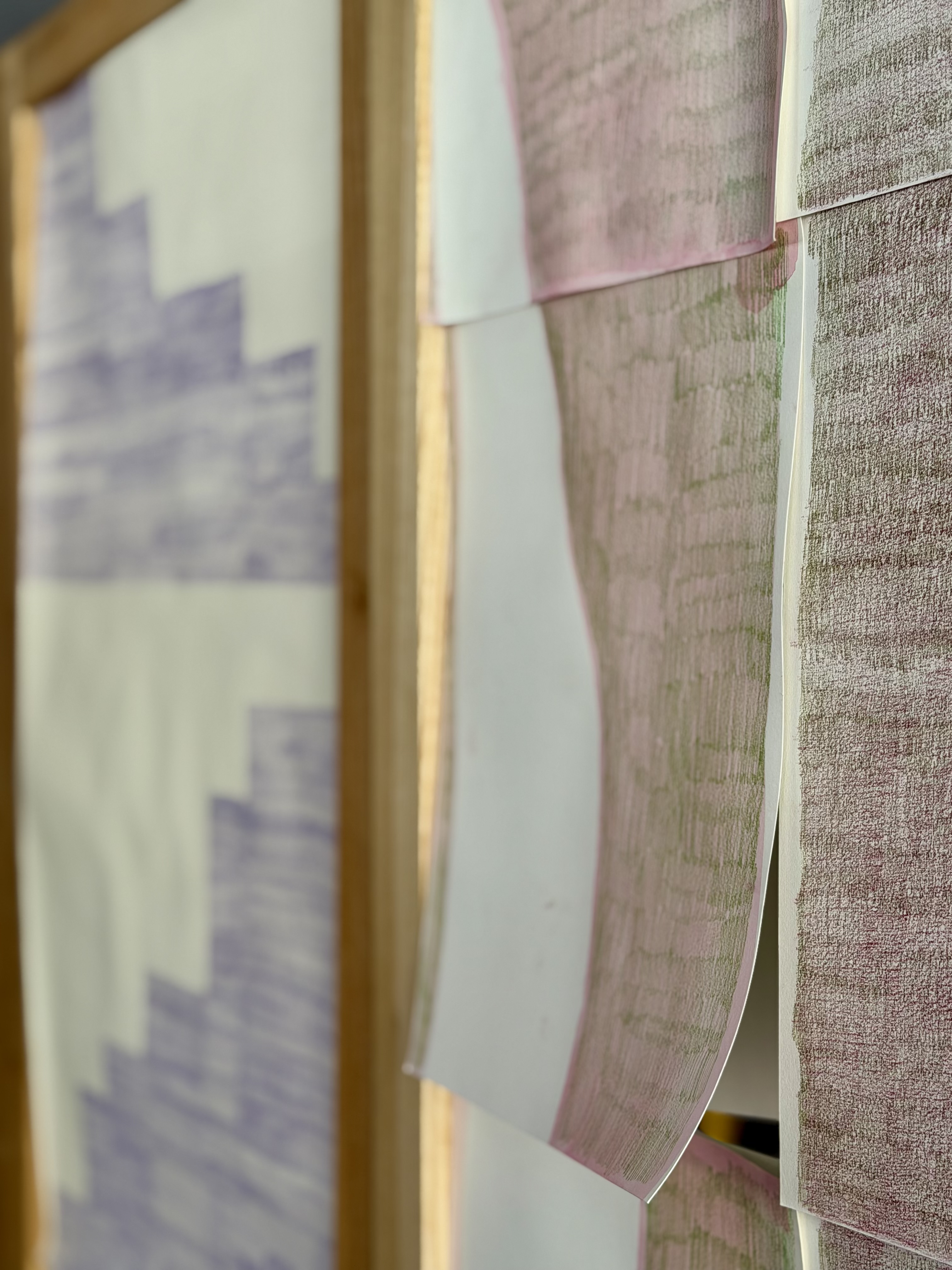
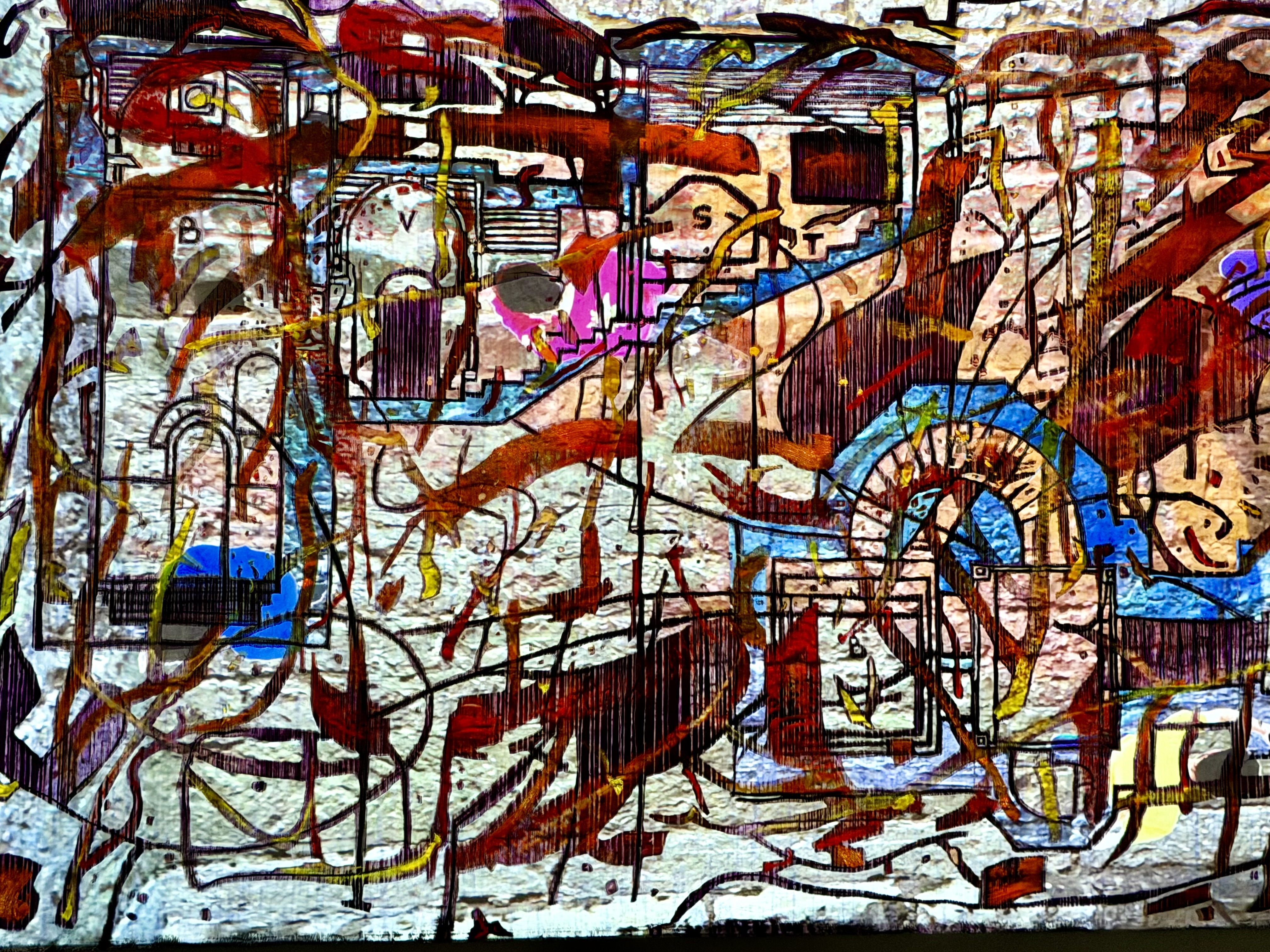
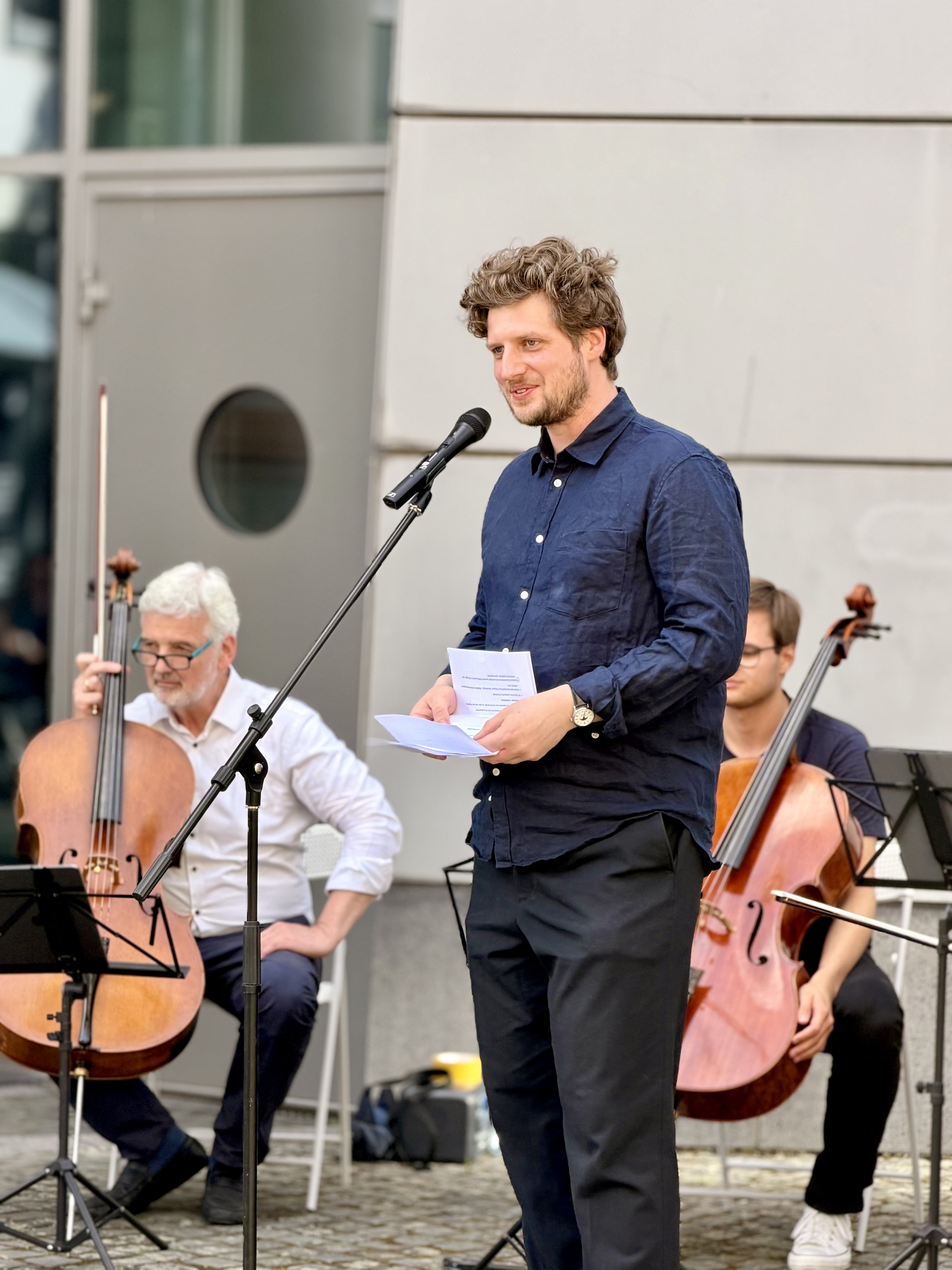
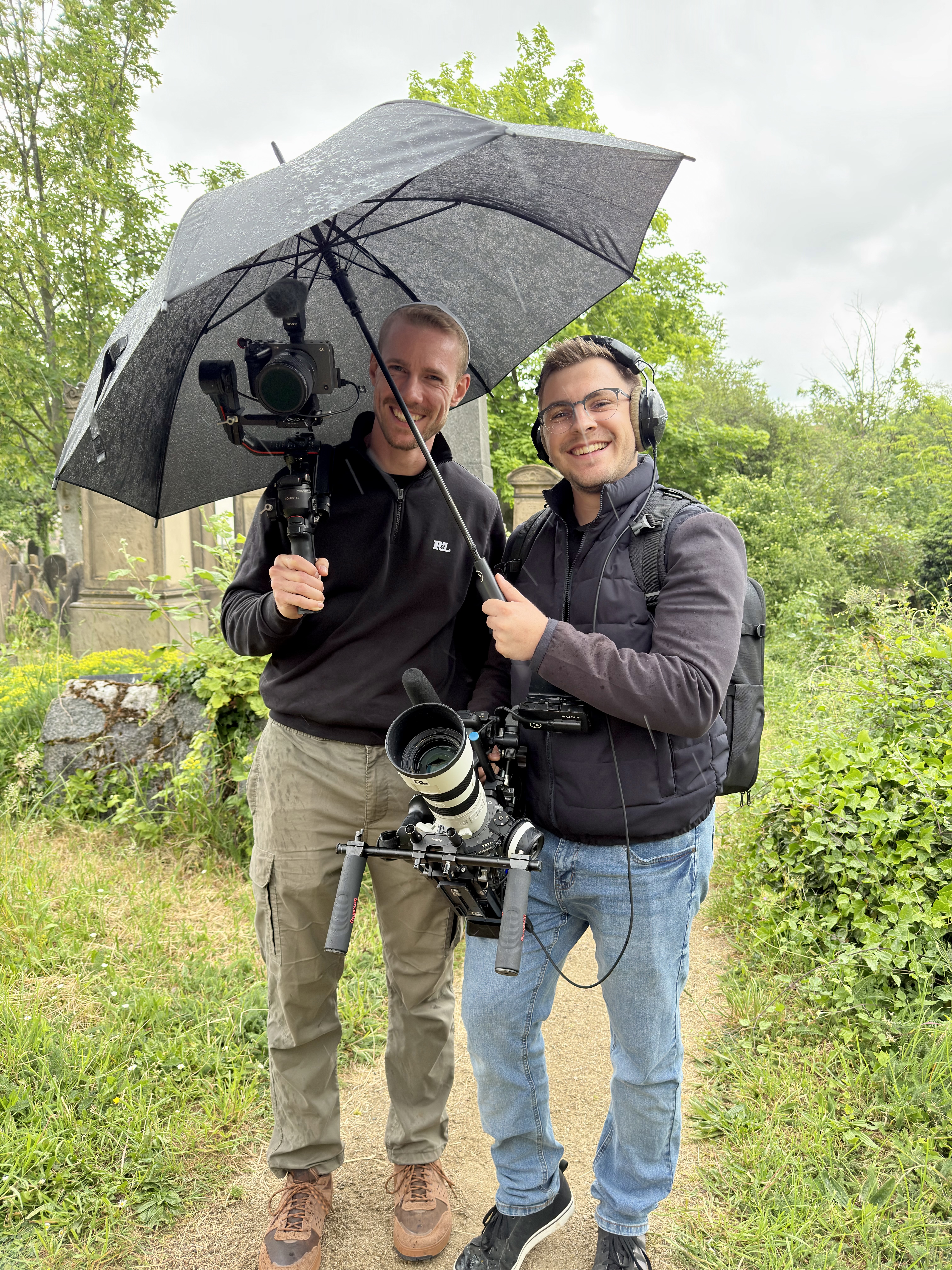
At the end of April, the highly anticipated international ShUM-Artists, Roy Efrat, Atalya Laufer, and Raphaël Fischer-Dieskau, arrived in Speyer, Worms, and Mainz, to begin their residencies. From then until the end of May 2026, they engaged artistically with the history and culture of the ShUM communities in these cities. The residence program aims to bring historical sites, traditions, and spaces of remembrance into dialogue with contemporary artistic perspectives. This creates new ways of engaging with Jewish heritage along the Rhine. During "Artist Talks," the artists presented their projects, creative approaches, and initial impressions of the ShUM cities. The festive closing events provided a forum to present the results of these artistic processes to a broad audience. Through exhibitions, presentations, and discussions, the resulting works were shown in their final form, inviting dialogue between art, history, and the present.The residency was documented on film by the Worms-based agency, Lindwurm. The film will be made available shortly.
The ShUM Artist-in-Residence Program was funded by the Ministry of Family, Women, Culture, and Integration as part of the Rhineland-Palatinate Cultural Summer.
Images
-
-
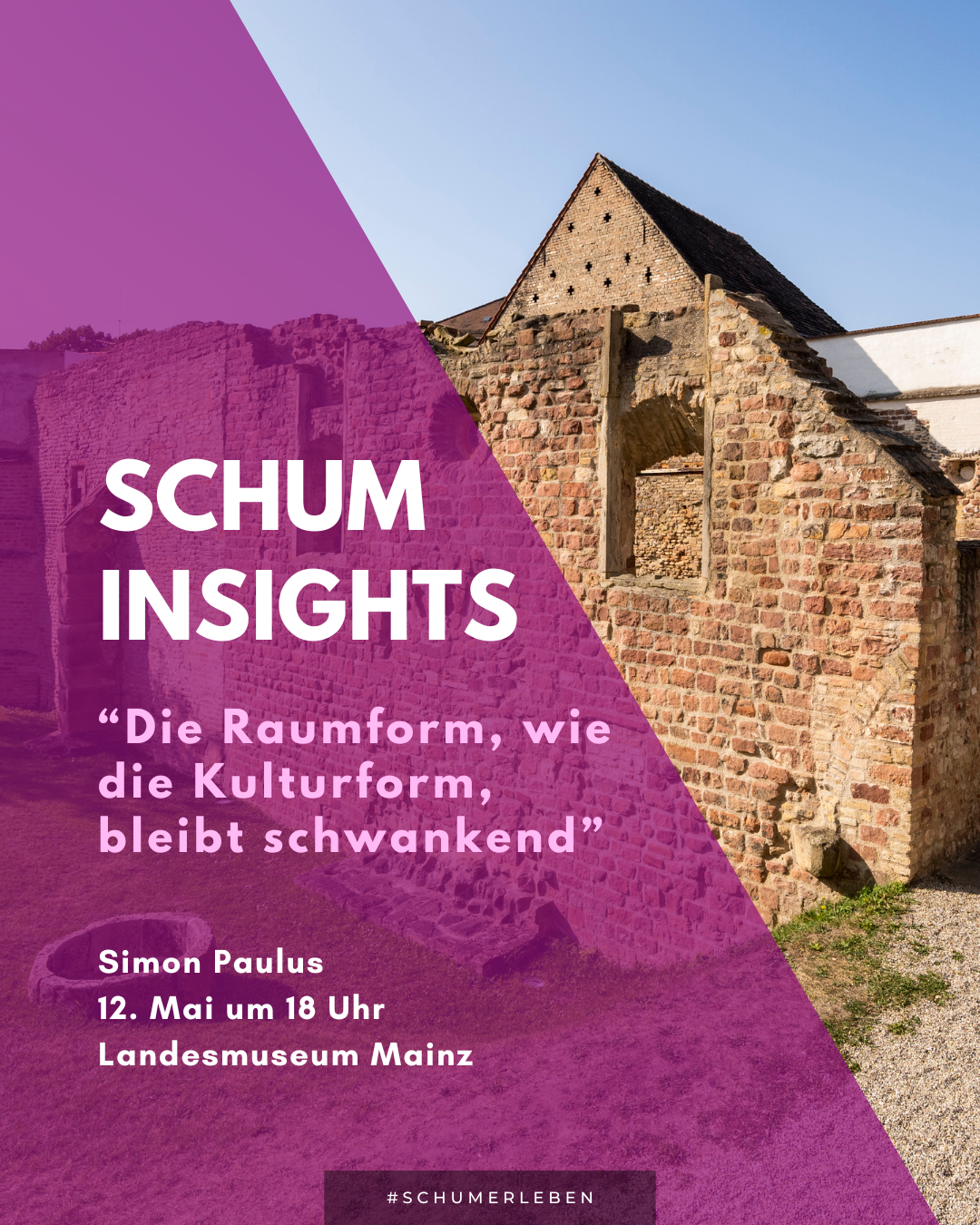
Nearly a century ago, in 1927, the young art historian Richard Krautheimer published the first comprehensive art-historical study of medieval synagogue architecture. His theories shaped research for decades and are still used today as a central reference for describing and characterizing the synagogue as the architectural center of Jewish community life in medieval urban spaces. However, since then, archaeological findings, comparative architectural research, and more in-depth source studies have significantly expanded our understanding of the significance of these buildings, painting a more complex picture than Krautheimer articulated.
To mark the nearly centenary anniversary of this study, PD Dr.-Ing. habil. Simon Paulus will address this topic in his hybrid lecture. The lecture is part of the "SchUM Insights" series, organized by the ShUM-Cities association. It will take place on May 12, 2026, at 6 p.m. at the Landesmuseum Mainz. The lecture will also be available online. Paulus will critically appraise and revise Krautheimer’s groundbreaking work. Starting with the synagogues of the ShUM communities, he will shed light on the historical significance of these buildings and present contemporary discourses and future perspectives in research on the architectural infrastructure and topography of Jewish residential quarters, drawing on current interdisciplinary approaches.
Please register via email by 12:00 p.m. on May 11 at anmeldung_at_gdke.rlp.de. Participants will receive the access link via email after the registration deadline. Participation is free of charge.
-
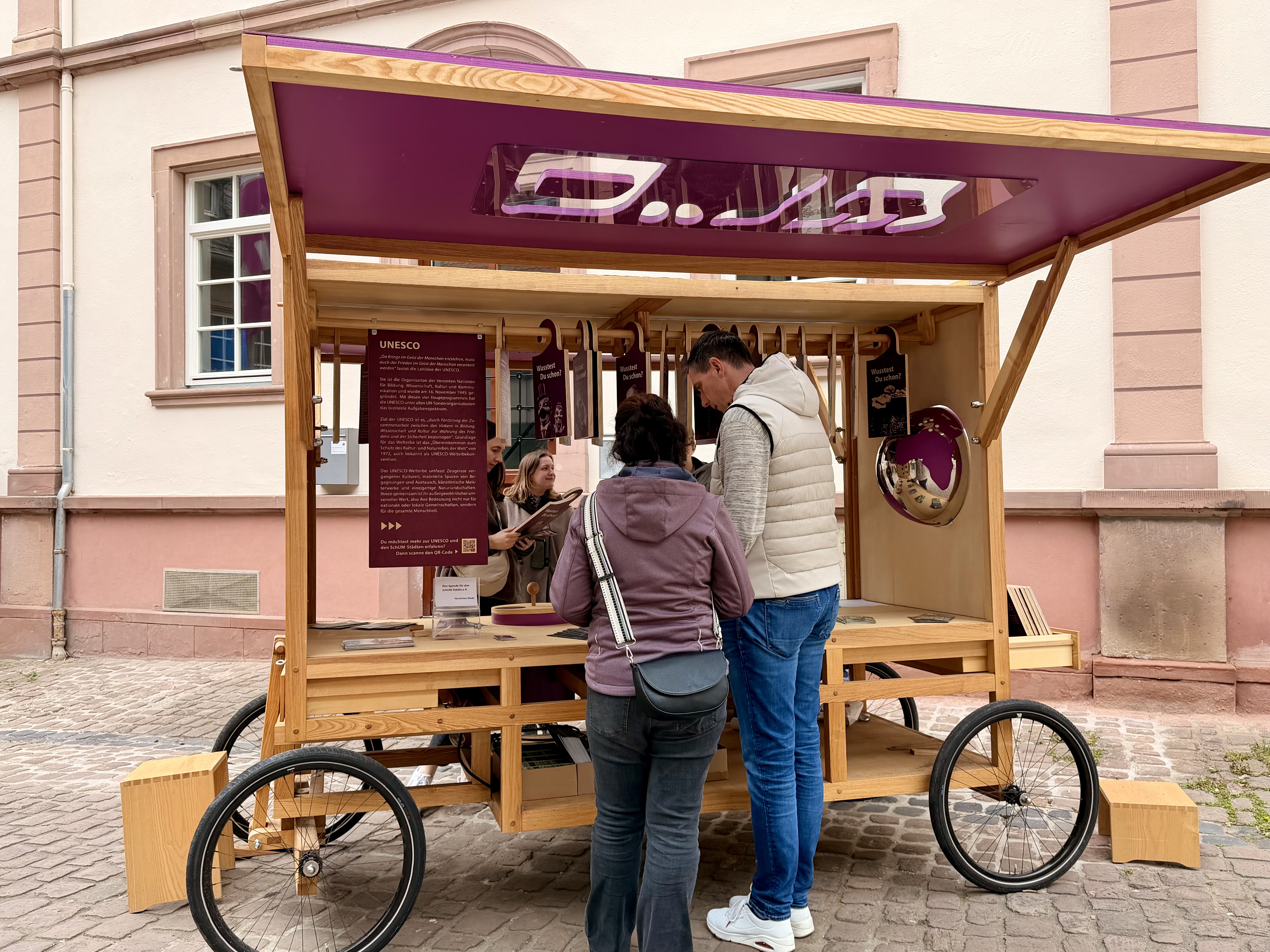
SchUMobil Meets Weinmeile: From April 23 to 26, 2026, the area between the Luther Monument and Luginsland in Worms will be transformed into a lively promenade for all ages.
Curious explorers will be happy to know that we'll also be there with the SchUMobil on the weekend!An exciting journey of discovery through the history, traditions, and culture of the UNESCO World Heritage ShUM Sites of Speyer, Worms, and Mainz awaits you.
The focus is on the regional and global significance of the ShUM sites:- What exactly is ShUM?
- Which World Heritage components are in Speyer, Worms, and Mainz, and what makes them special worldwide?
- Which Jewish rituals and customs are part of Ashkenazi everyday culture?
Small, interactive stations—such as the engaging "Did You Know?" panels—invite visitors of all ages to discover the Jewish heritage along the Rhine in a playful way and to gain a better understanding of Jewish culture.
Forecourt of the Heylshof Museum
Saturday, April 25, 3–8 p.m.
Sunday, April 26, 12–6 p.m.
-
What happened after Germany's first Jewish World Heritage site was established? What has happened in Speyer, Worms, and Mainz since then? What projects have been launched, what measures have been implemented, and what plans are in store for the future? What role does the SchUM Association play in protecting, researching, and promoting this World Heritage site?
These questions were the focus of the exhibition, "5 Years of UNESCO World Heritage SchUM Sites: Five Years of Protection, Research, and Education,” presented by the SchUM Cities of Speyer, Worms, and Mainz e.V. at the SchUM-Lab in Worms from September 4 to October 15.
The exhibition showcased the extensive restoration and renovation efforts undertaken to safeguard the World Heritage components and presented current research findings. The exhibition also offered a behind-the-scenes look at the work of the SchUM Association and presented numerous projects, events, and educational programs developed over the past five years.
"Five years as a UNESCO World Heritage Site is a good occasion to pause, highlight developments, and at the same time look ahead. With this exhibition, we want to show how diverse the work surrounding the SchUM sites is and how many people are involved in it” (Birgit Kita).
-
On 6 September, together with the City of Mainz and numerous guests from the worlds of politics, civil society and culture, we celebrated the opening of the first ShUM Visitor Centre for our serial World Heritage Site. The exhibition at the "Sali-Levi-Haus" allows visitors to learn about the rich Jewish history of the ShUM communities and the ShUM Sites in Speyer, Worms, and Mainz. The visitor centre also offers fascinating views of the Judensand and allows visitors to explore the Old Jewish Cemetery Judensand independently.
'With the opening of the "Sali-Levi-Haus" today, we have created a place where nearly 1,000 years of Jewish history along the Rhine come to life. It is a place of education, encounter and exchange that will promote understanding, tolerance and mutual respect across all boundaries, and we are very pleased about that' (Birgit Kita).
The Sali-Levi-Haus is open Tuesday to Sunday:
April–September: 10 a.m.–5 p.m.
October–March: 10 a.m.–4 p.m.
Individual visits to the Judensand are also possible on Wednesdays, Thursdays, Fridays, and Sundays:
April–September: 9 a.m.–6 p.m.
October–March: 10 a.m.–4 p.m.For more information, visit www.judensand-mainz.de.
-
The ShUM Sites tell the story of medieval history and Jewish heritage, representing 1,000 years of vibrant Jewish life and connecting the past, present and future. In today's world, understanding different cultures and religions is crucial for fostering encounter, dialogue, and open coexistence.
To further this understanding, the RegioAkademie Pfalz is offering an online seminar this autumn in cooperation with the ShUM-Cities Association as part of a joint continuing education series for tour guides from the ShUM cities.
Spread over four evenings, Gabriela Schlick-Bamberger, director of Jeschurun, the religious school of the Jewish Community of Frankfurt am Main, will share her insights into Jewish religion, culture, and traditions. The seminar will also explore the significance of Jewish ritual baths, cemeteries, and synagogues in religious practice.The seminar will take place on 22 and 29 October and 5 and 12 November 2026, from 6:00–8:00 p.m. each evening. The cost is €52 (with a minimum of 10 participants) and places are limited to 20 participants.The registration deadline is 2 October 2026.
The seminar can only be booked as a complete package for all four sessions.
For more information and to register, visit www.regioakademie.de. -
In 2021, the ShUM sites in Speyer, Worms, and Mainz were included on the UNESCO World Heritage List, officially recognising an extraordinary chapter in German and European history: One thousand years of Jewish heritage along the Rhine, shaped by scholarship, religious life, cultural exchange and a social impact that extended far beyond the region. Five years later, the ShUM-Cities Association, together with the ShUM cities, numerous partners, the state of Rhineland-Palatinate and local residents, celebrated this special anniversary with a year-long series of diverse festivities. The festivities began with the World Heritage Anniversary on 26 July 2026 at the Jewry Court in Speyer.
From 4 September, an exhibition at the SchUM-Lab in Worms will showcase the ShUM-Cities Association's and the ShUM cities' projects from the past five years, demonstrating how the UNESCO World Heritage Site has evolved since its designation. On 6 September, a special milestone will be reached with the grand opening of the first visitor centre for the ShUM Sites. Located above the 'Old Jewish Cemetery Judensand' in Mainz, the 'Sali-Levi-Haus' will serve as a new gathering place. In future, the visitor centre will provide information about Mainz's rich Jewish history, offer fascinating views of the Judensand and enable visitors to explore the World Heritage Site in Mainz independently.
-
From July 17, the rear section of the Old Jewish Cemetery "Heiliger Sand" in Worms will be temporarily closed to visitors due to essential maintenance work.
In addition, from July 27 to August 2, the cemetery will open at 12:00 noon instead of its regular opening time of 10:00 a.m. These temporary measures are necessary to ensure that the required work can be carried out safely and efficiently while avoiding a full-day closure.
The City of Worms kindly asks visitors for their understanding during this temporary period of restricted access.
-
Since April 2026, the mobile visitor center, the "SchUMobil," has been touring its hometown of Worms. At various events, the ShUM-Cities association uses the SchUMobil to share interesting facts about the UNESCO World Heritage ShUM Sites of Speyer, Worms, and Mainz. The next opportunity to experience Germany's first Jewish UNESCO World Heritage Site in an entertaining and interactive way will be on June 13 during Worms Culture Night. For the 18th year in a row, local artists will showcase the city's rich culture and history at over 30 locations.
Participation, wonder, and learning are also on the agenda for this evening, which includes a free children's workshop "Reading and Writing with Jakub." The workshop takes participants on an exciting journey back in time. Together with Jakub, an orphan boy trained as a sorcerer’s apprentice by the famous Jewish scholar MaHaRiL in medieval Worms who must pass an exam to prove his skills, participants will discover the Hebrew alphabet, the Alef-Bet. The workshop is suitable for explorers of all ages. At a painting and crafting station, participants can explore their own initials in Hebrew script and the symbols of the SchUM sites.
SA 13. Juni | 17 bis 22 Uhr
SchUMobil and the children's workshop "Reading and Writing with Jakub: A Journey Through Time," presented by the ShUM-Cities associationIn front of the Trinity Church, Marktplatz 12, 67547 Worms.
-
The ShUM-Artist in Residence 2026 program is entering its final phase!
Over the past few weeks, the three fellows Roy Efrat, Atalya Laufer, and Raphaël Fischer-Dieskau have immersed themselves in the history, culture, and traditions of the ShUM communities along the Rhine in order to develop their own artistic projects.
"These projects build bridges between the past, present, and future, offering new perspectives on a unique worldwide cultural heritage" (Birgit Kita).Next week, the resulting works will be presented to the public. Through exhibitions, presentations, and discussions, the ShUM artists will share their work and encourage an exchange of ideas between art, urban society, and history. Free admission and no registration required.
Worms: Tuesday, May 26, 6:00 p.m. Closing event with Atalya Laufer
SchUM-Lab, Neumarkt 10, 67547 Worms
Speyer: Tuesday, May 26, 6:30 p.m. Closing event with Roy Efrat (English)
Museum SchPIRA, Kleine Pfaffengasse 22, 67346 Speyer
Mainz: Wednesday, May 27, at 5:30 p.m. Closing event with Raphaël Fischer-Dieskau
Klarastraße 10, 55116 Mainz (outdoor area)
-
At the end of April, the highly anticipated international ShUM-Artists, Roy Efrat, Atalya Laufer, and Raphaël Fischer-Dieskau, arrived in Speyer, Worms, and Mainz, to begin their residencies. From then until the end of May 2026, they engaged artistically with the history and culture of the ShUM communities in these cities. The residence program aims to bring historical sites, traditions, and spaces of remembrance into dialogue with contemporary artistic perspectives. This creates new ways of engaging with Jewish heritage along the Rhine. During "Artist Talks," the artists presented their projects, creative approaches, and initial impressions of the ShUM cities. The festive closing events provided a forum to present the results of these artistic processes to a broad audience. Through exhibitions, presentations, and discussions, the resulting works were shown in their final form, inviting dialogue between art, history, and the present.The residency was documented on film by the Worms-based agency, Lindwurm. The film will be made available shortly.
The ShUM Artist-in-Residence Program was funded by the Ministry of Family, Women, Culture, and Integration as part of the Rhineland-Palatinate Cultural Summer.
Images
-
-
Nearly a century ago, in 1927, the young art historian Richard Krautheimer published the first comprehensive art-historical study of medieval synagogue architecture. His theories shaped research for decades and are still used today as a central reference for describing and characterizing the synagogue as the architectural center of Jewish community life in medieval urban spaces. However, since then, archaeological findings, comparative architectural research, and more in-depth source studies have significantly expanded our understanding of the significance of these buildings, painting a more complex picture than Krautheimer articulated.
To mark the nearly centenary anniversary of this study, PD Dr.-Ing. habil. Simon Paulus will address this topic in his hybrid lecture. The lecture is part of the "SchUM Insights" series, organized by the ShUM-Cities association. It will take place on May 12, 2026, at 6 p.m. at the Landesmuseum Mainz. The lecture will also be available online. Paulus will critically appraise and revise Krautheimer’s groundbreaking work. Starting with the synagogues of the ShUM communities, he will shed light on the historical significance of these buildings and present contemporary discourses and future perspectives in research on the architectural infrastructure and topography of Jewish residential quarters, drawing on current interdisciplinary approaches.
Please register via email by 12:00 p.m. on May 11 at anmeldung_at_gdke.rlp.de. Participants will receive the access link via email after the registration deadline. Participation is free of charge.
-
SchUMobil Meets Weinmeile: From April 23 to 26, 2026, the area between the Luther Monument and Luginsland in Worms will be transformed into a lively promenade for all ages.
Curious explorers will be happy to know that we'll also be there with the SchUMobil on the weekend!An exciting journey of discovery through the history, traditions, and culture of the UNESCO World Heritage ShUM Sites of Speyer, Worms, and Mainz awaits you.
The focus is on the regional and global significance of the ShUM sites:- What exactly is ShUM?
- Which World Heritage components are in Speyer, Worms, and Mainz, and what makes them special worldwide?
- Which Jewish rituals and customs are part of Ashkenazi everyday culture?
Small, interactive stations—such as the engaging "Did You Know?" panels—invite visitors of all ages to discover the Jewish heritage along the Rhine in a playful way and to gain a better understanding of Jewish culture.
Forecourt of the Heylshof Museum
Saturday, April 25, 3–8 p.m.
Sunday, April 26, 12–6 p.m.
ständige Angebote
-
What happened after Germany's first Jewish World Heritage site was established? What has happened in Speyer, Worms, and Mainz since then? What projects have been launched, what measures have been implemented, and what plans are in store for the future? What role does the SchUM Association play in protecting, researching, and promoting this World Heritage site?
These questions were the focus of the exhibition, "5 Years of UNESCO World Heritage SchUM Sites: Five Years of Protection, Research, and Education,” presented by the SchUM Cities of Speyer, Worms, and Mainz e.V. at the SchUM-Lab in Worms from September 4 to October 15.
The exhibition showcased the extensive restoration and renovation efforts undertaken to safeguard the World Heritage components and presented current research findings. The exhibition also offered a behind-the-scenes look at the work of the SchUM Association and presented numerous projects, events, and educational programs developed over the past five years.
"Five years as a UNESCO World Heritage Site is a good occasion to pause, highlight developments, and at the same time look ahead. With this exhibition, we want to show how diverse the work surrounding the SchUM sites is and how many people are involved in it” (Birgit Kita).
-
On 6 September, together with the City of Mainz and numerous guests from the worlds of politics, civil society and culture, we celebrated the opening of the first ShUM Visitor Centre for our serial World Heritage Site. The exhibition at the "Sali-Levi-Haus" allows visitors to learn about the rich Jewish history of the ShUM communities and the ShUM Sites in Speyer, Worms, and Mainz. The visitor centre also offers fascinating views of the Judensand and allows visitors to explore the Old Jewish Cemetery Judensand independently.
'With the opening of the "Sali-Levi-Haus" today, we have created a place where nearly 1,000 years of Jewish history along the Rhine come to life. It is a place of education, encounter and exchange that will promote understanding, tolerance and mutual respect across all boundaries, and we are very pleased about that' (Birgit Kita).
The Sali-Levi-Haus is open Tuesday to Sunday:
April–September: 10 a.m.–5 p.m.
October–March: 10 a.m.–4 p.m.
Individual visits to the Judensand are also possible on Wednesdays, Thursdays, Fridays, and Sundays:
April–September: 9 a.m.–6 p.m.
October–March: 10 a.m.–4 p.m.For more information, visit www.judensand-mainz.de.
-
The ShUM Sites tell the story of medieval history and Jewish heritage, representing 1,000 years of vibrant Jewish life and connecting the past, present and future. In today's world, understanding different cultures and religions is crucial for fostering encounter, dialogue, and open coexistence.
To further this understanding, the RegioAkademie Pfalz is offering an online seminar this autumn in cooperation with the ShUM-Cities Association as part of a joint continuing education series for tour guides from the ShUM cities.
Spread over four evenings, Gabriela Schlick-Bamberger, director of Jeschurun, the religious school of the Jewish Community of Frankfurt am Main, will share her insights into Jewish religion, culture, and traditions. The seminar will also explore the significance of Jewish ritual baths, cemeteries, and synagogues in religious practice.The seminar will take place on 22 and 29 October and 5 and 12 November 2026, from 6:00–8:00 p.m. each evening. The cost is €52 (with a minimum of 10 participants) and places are limited to 20 participants.The registration deadline is 2 October 2026.
The seminar can only be booked as a complete package for all four sessions.
For more information and to register, visit www.regioakademie.de. -
In 2021, the ShUM sites in Speyer, Worms, and Mainz were included on the UNESCO World Heritage List, officially recognising an extraordinary chapter in German and European history: One thousand years of Jewish heritage along the Rhine, shaped by scholarship, religious life, cultural exchange and a social impact that extended far beyond the region. Five years later, the ShUM-Cities Association, together with the ShUM cities, numerous partners, the state of Rhineland-Palatinate and local residents, celebrated this special anniversary with a year-long series of diverse festivities. The festivities began with the World Heritage Anniversary on 26 July 2026 at the Jewry Court in Speyer.
From 4 September, an exhibition at the SchUM-Lab in Worms will showcase the ShUM-Cities Association's and the ShUM cities' projects from the past five years, demonstrating how the UNESCO World Heritage Site has evolved since its designation. On 6 September, a special milestone will be reached with the grand opening of the first visitor centre for the ShUM Sites. Located above the 'Old Jewish Cemetery Judensand' in Mainz, the 'Sali-Levi-Haus' will serve as a new gathering place. In future, the visitor centre will provide information about Mainz's rich Jewish history, offer fascinating views of the Judensand and enable visitors to explore the World Heritage Site in Mainz independently.
-
From July 17, the rear section of the Old Jewish Cemetery "Heiliger Sand" in Worms will be temporarily closed to visitors due to essential maintenance work.
In addition, from July 27 to August 2, the cemetery will open at 12:00 noon instead of its regular opening time of 10:00 a.m. These temporary measures are necessary to ensure that the required work can be carried out safely and efficiently while avoiding a full-day closure.
The City of Worms kindly asks visitors for their understanding during this temporary period of restricted access.
-
Since April 2026, the mobile visitor center, the "SchUMobil," has been touring its hometown of Worms. At various events, the ShUM-Cities association uses the SchUMobil to share interesting facts about the UNESCO World Heritage ShUM Sites of Speyer, Worms, and Mainz. The next opportunity to experience Germany's first Jewish UNESCO World Heritage Site in an entertaining and interactive way will be on June 13 during Worms Culture Night. For the 18th year in a row, local artists will showcase the city's rich culture and history at over 30 locations.
Participation, wonder, and learning are also on the agenda for this evening, which includes a free children's workshop "Reading and Writing with Jakub." The workshop takes participants on an exciting journey back in time. Together with Jakub, an orphan boy trained as a sorcerer’s apprentice by the famous Jewish scholar MaHaRiL in medieval Worms who must pass an exam to prove his skills, participants will discover the Hebrew alphabet, the Alef-Bet. The workshop is suitable for explorers of all ages. At a painting and crafting station, participants can explore their own initials in Hebrew script and the symbols of the SchUM sites.
SA 13. Juni | 17 bis 22 Uhr
SchUMobil and the children's workshop "Reading and Writing with Jakub: A Journey Through Time," presented by the ShUM-Cities associationIn front of the Trinity Church, Marktplatz 12, 67547 Worms.
-
The ShUM-Artist in Residence 2026 program is entering its final phase!
Over the past few weeks, the three fellows Roy Efrat, Atalya Laufer, and Raphaël Fischer-Dieskau have immersed themselves in the history, culture, and traditions of the ShUM communities along the Rhine in order to develop their own artistic projects.
"These projects build bridges between the past, present, and future, offering new perspectives on a unique worldwide cultural heritage" (Birgit Kita).Next week, the resulting works will be presented to the public. Through exhibitions, presentations, and discussions, the ShUM artists will share their work and encourage an exchange of ideas between art, urban society, and history. Free admission and no registration required.
Worms: Tuesday, May 26, 6:00 p.m. Closing event with Atalya Laufer
SchUM-Lab, Neumarkt 10, 67547 Worms
Speyer: Tuesday, May 26, 6:30 p.m. Closing event with Roy Efrat (English)
Museum SchPIRA, Kleine Pfaffengasse 22, 67346 Speyer
Mainz: Wednesday, May 27, at 5:30 p.m. Closing event with Raphaël Fischer-Dieskau
Klarastraße 10, 55116 Mainz (outdoor area)
-
At the end of April, the highly anticipated international ShUM-Artists, Roy Efrat, Atalya Laufer, and Raphaël Fischer-Dieskau, arrived in Speyer, Worms, and Mainz, to begin their residencies. From then until the end of May 2026, they engaged artistically with the history and culture of the ShUM communities in these cities. The residence program aims to bring historical sites, traditions, and spaces of remembrance into dialogue with contemporary artistic perspectives. This creates new ways of engaging with Jewish heritage along the Rhine. During "Artist Talks," the artists presented their projects, creative approaches, and initial impressions of the ShUM cities. The festive closing events provided a forum to present the results of these artistic processes to a broad audience. Through exhibitions, presentations, and discussions, the resulting works were shown in their final form, inviting dialogue between art, history, and the present.The residency was documented on film by the Worms-based agency, Lindwurm. The film will be made available shortly.
The ShUM Artist-in-Residence Program was funded by the Ministry of Family, Women, Culture, and Integration as part of the Rhineland-Palatinate Cultural Summer.
Images
-
-
Nearly a century ago, in 1927, the young art historian Richard Krautheimer published the first comprehensive art-historical study of medieval synagogue architecture. His theories shaped research for decades and are still used today as a central reference for describing and characterizing the synagogue as the architectural center of Jewish community life in medieval urban spaces. However, since then, archaeological findings, comparative architectural research, and more in-depth source studies have significantly expanded our understanding of the significance of these buildings, painting a more complex picture than Krautheimer articulated.
To mark the nearly centenary anniversary of this study, PD Dr.-Ing. habil. Simon Paulus will address this topic in his hybrid lecture. The lecture is part of the "SchUM Insights" series, organized by the ShUM-Cities association. It will take place on May 12, 2026, at 6 p.m. at the Landesmuseum Mainz. The lecture will also be available online. Paulus will critically appraise and revise Krautheimer’s groundbreaking work. Starting with the synagogues of the ShUM communities, he will shed light on the historical significance of these buildings and present contemporary discourses and future perspectives in research on the architectural infrastructure and topography of Jewish residential quarters, drawing on current interdisciplinary approaches.
Please register via email by 12:00 p.m. on May 11 at anmeldung_at_gdke.rlp.de. Participants will receive the access link via email after the registration deadline. Participation is free of charge.
-
SchUMobil Meets Weinmeile: From April 23 to 26, 2026, the area between the Luther Monument and Luginsland in Worms will be transformed into a lively promenade for all ages.
Curious explorers will be happy to know that we'll also be there with the SchUMobil on the weekend!An exciting journey of discovery through the history, traditions, and culture of the UNESCO World Heritage ShUM Sites of Speyer, Worms, and Mainz awaits you.
The focus is on the regional and global significance of the ShUM sites:- What exactly is ShUM?
- Which World Heritage components are in Speyer, Worms, and Mainz, and what makes them special worldwide?
- Which Jewish rituals and customs are part of Ashkenazi everyday culture?
Small, interactive stations—such as the engaging "Did You Know?" panels—invite visitors of all ages to discover the Jewish heritage along the Rhine in a playful way and to gain a better understanding of Jewish culture.
Forecourt of the Heylshof Museum
Saturday, April 25, 3–8 p.m.
Sunday, April 26, 12–6 p.m.